What epoxy flake flooring actually is
A flake floor is a layered system, and each layer does a specific job.
Preparation comes first. Planetary diamond grinding to a CSP-3 profile, crack repair, removal of old coatings or adhesive, and moisture testing of the slab. Nothing above this layer matters if this layer is wrong.
The base coat — epoxy, polyurea or polyaspartic depending on the space and the conditions on install day — bonds into the open concrete and anchors the whole system.
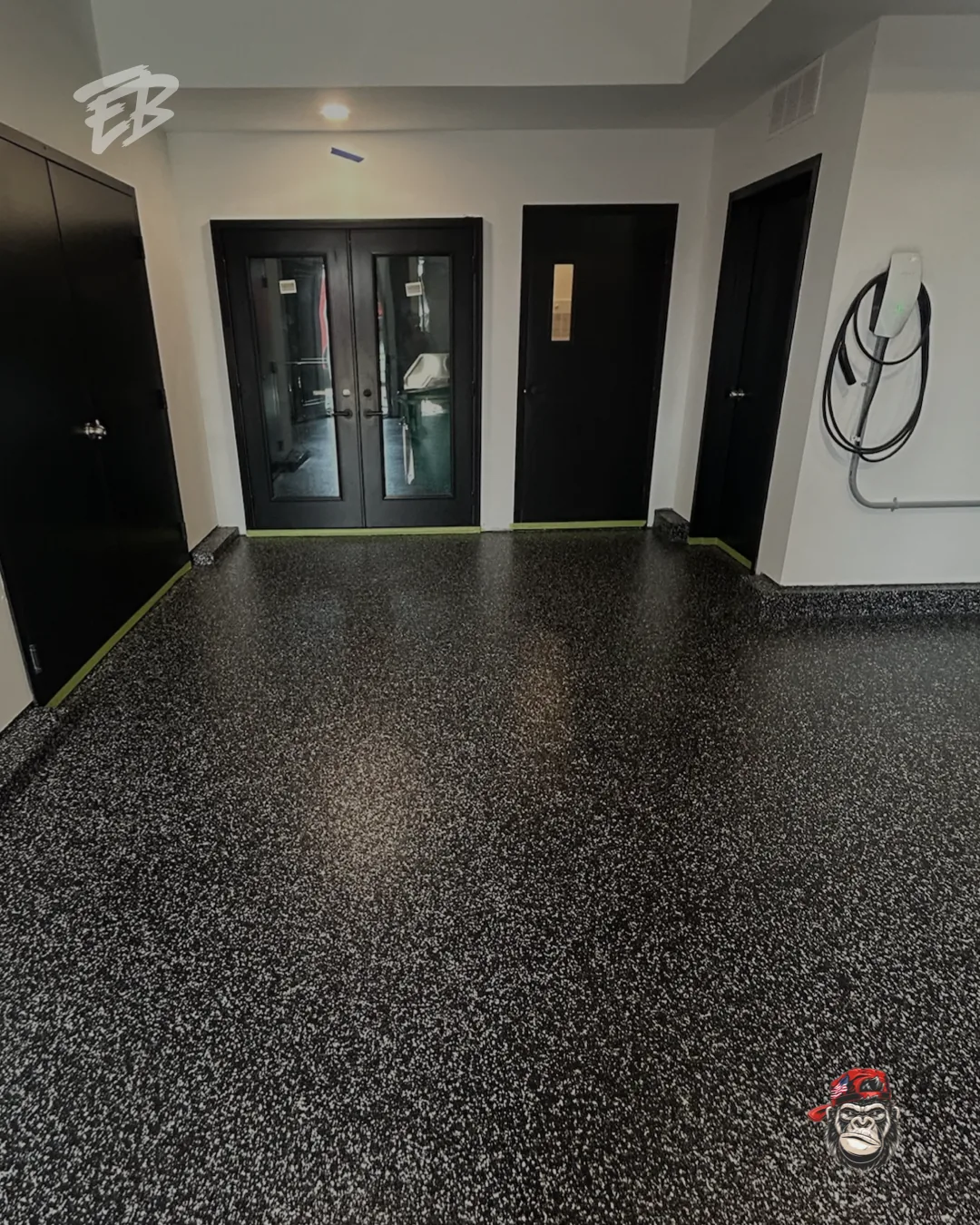
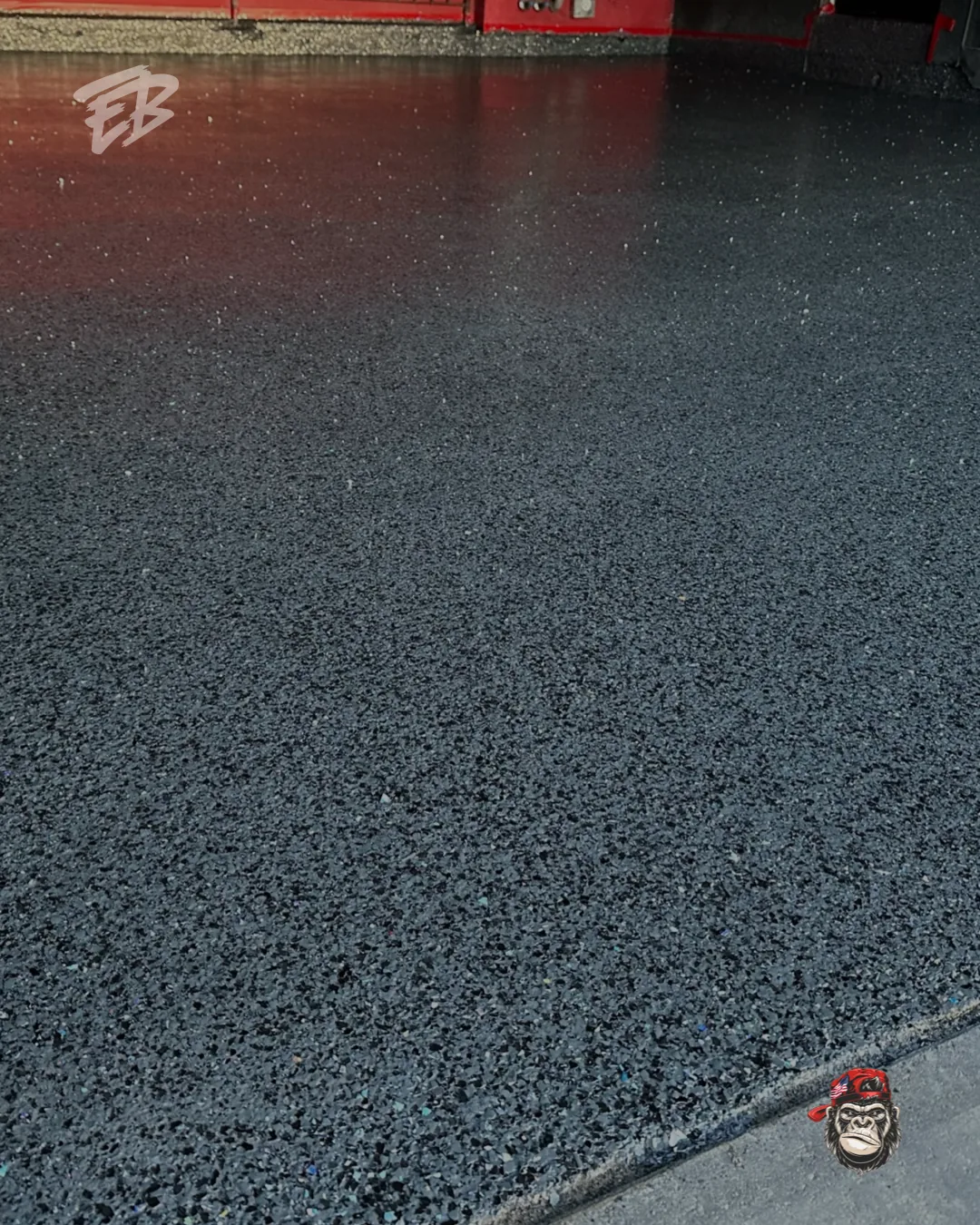
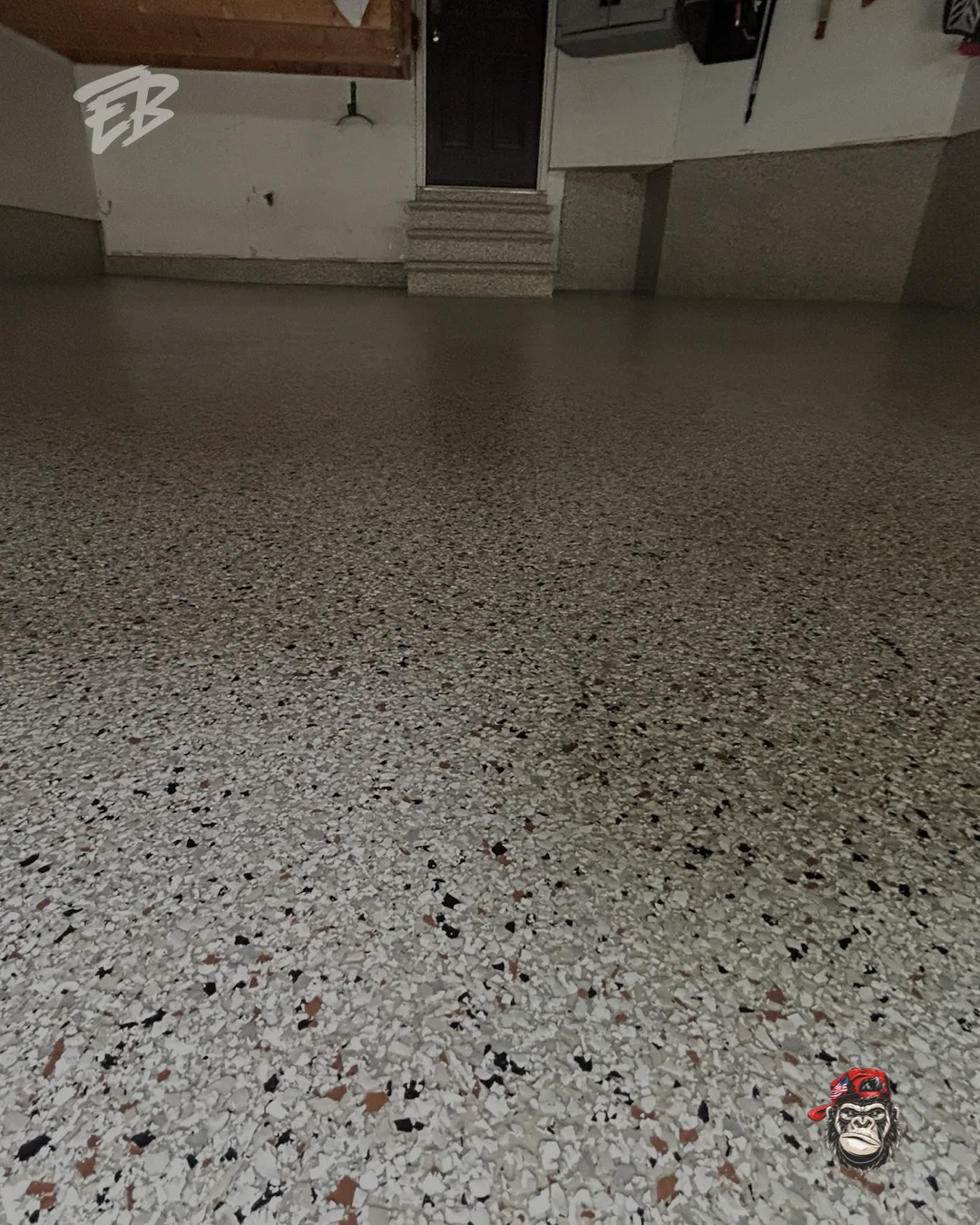
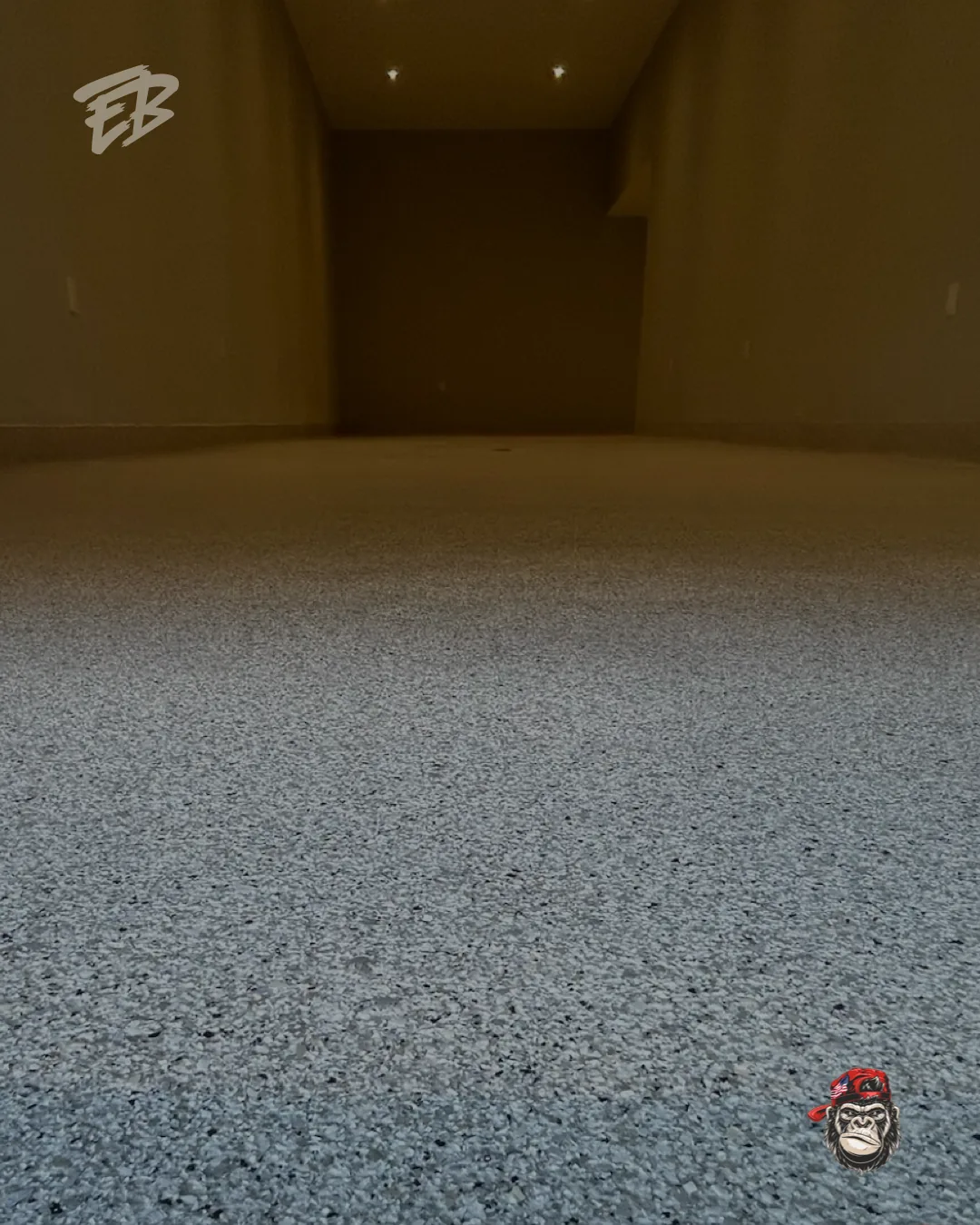
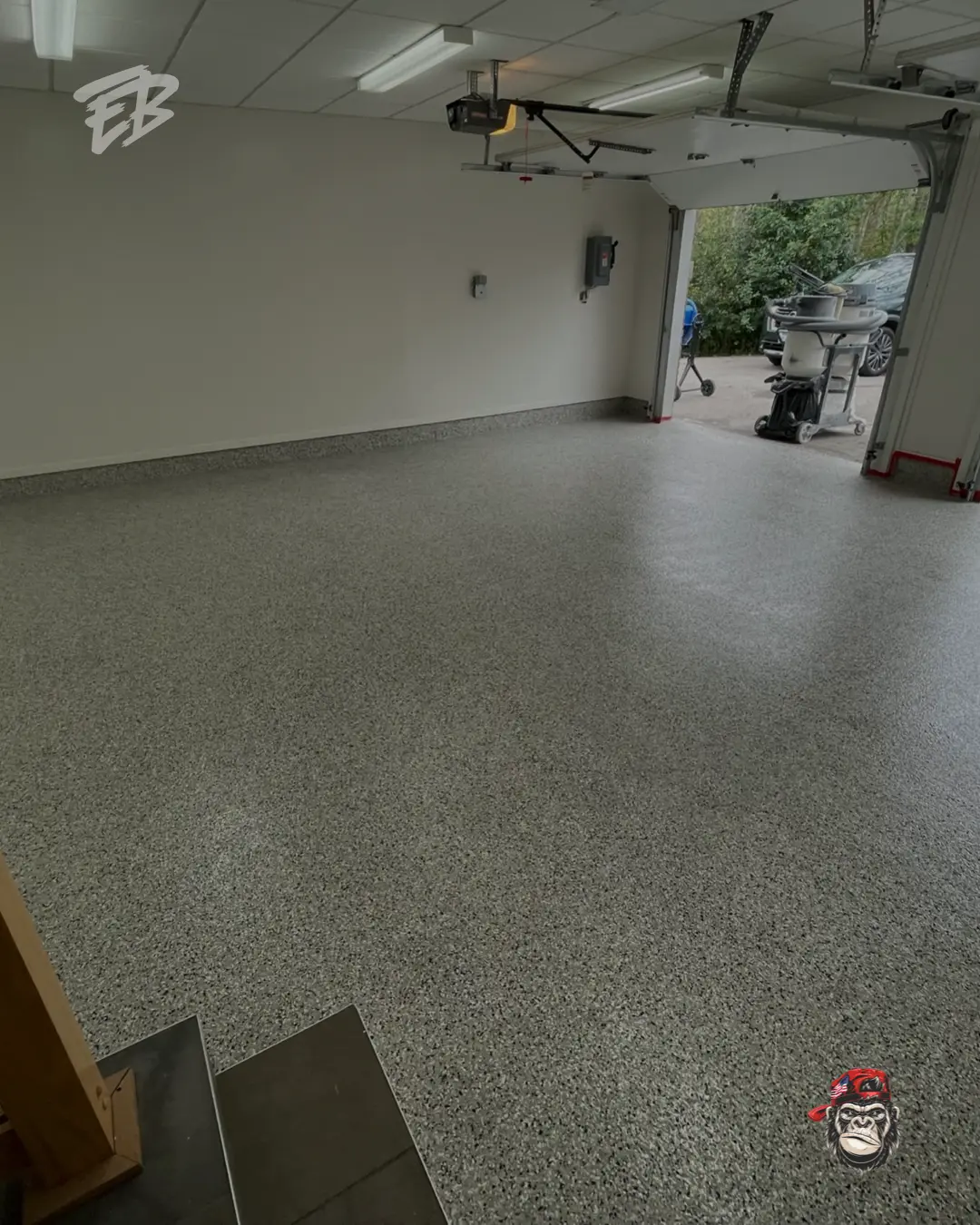
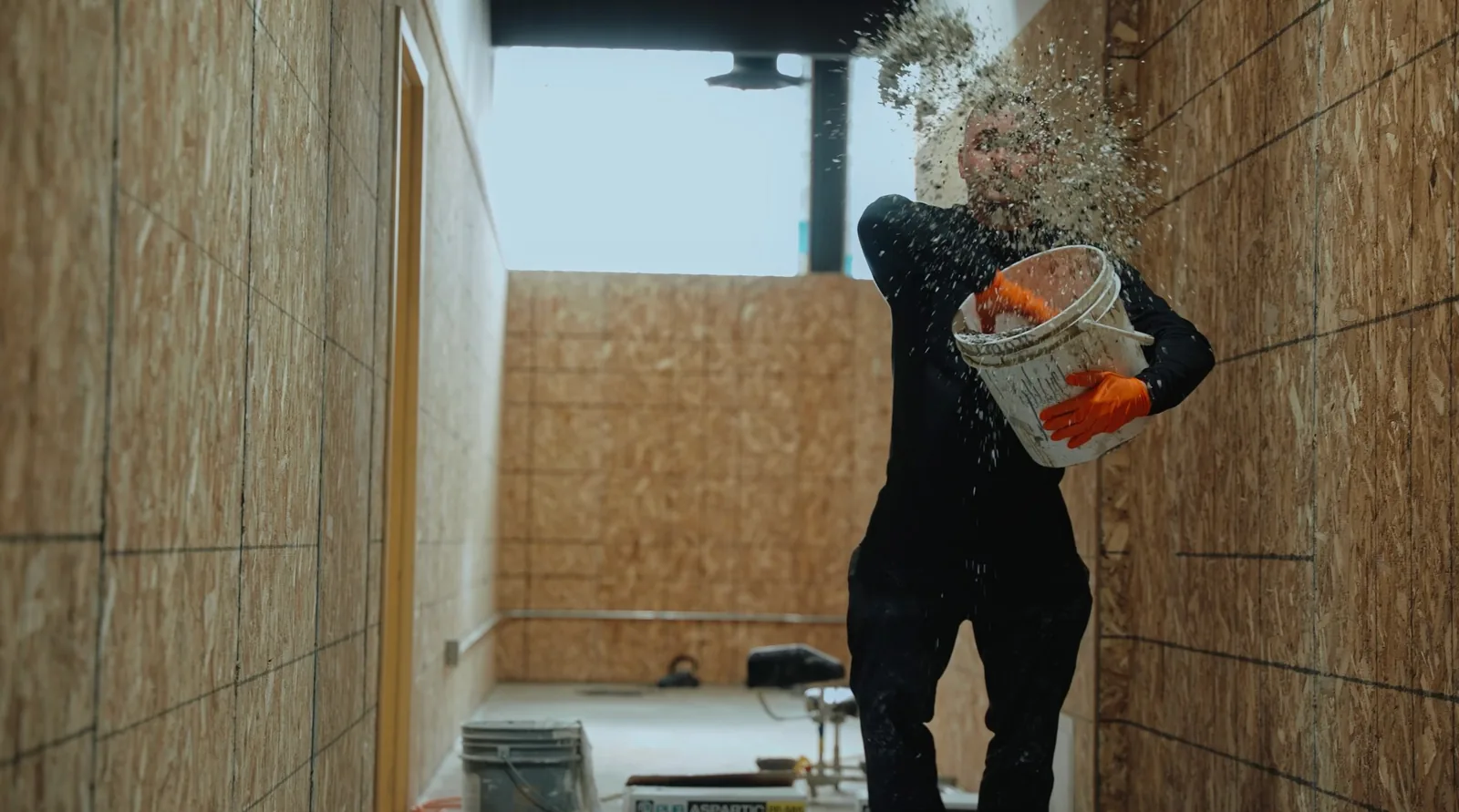
The flake broadcast goes in wet, to refusal: vinyl flakes thrown until the base coat can't hold any more. Full coverage, not a sprinkle. The flakes are UV-stable and colorfast, and they're what give the floor its texture and depth.
The topcoat — polyaspartic or aliphatic urethane — seals everything and takes the abuse. Aluminum oxide or quartz can be added for extra traction where the floor gets wet.
Durability and slip resistance
The flake layer isn't decorative padding. It creates a micro-texture across the entire surface, which means grip — and grip matters in a climate where garage floors get wet from rain blowing through an open bay door, not just from spills.
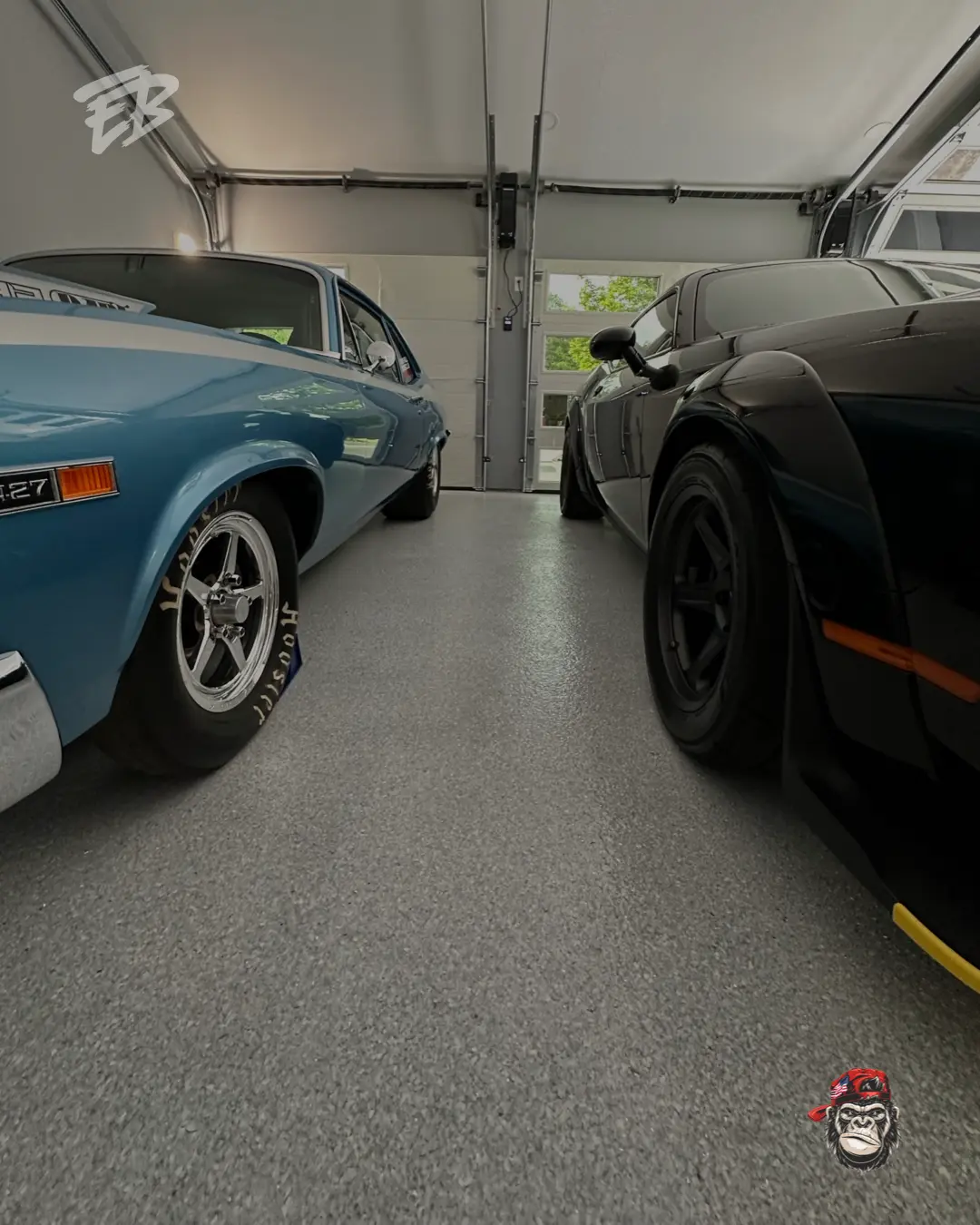
The topcoat handles the rest: oil and chemical spills, dropped tools, steel wheels, and hot-tire pickup in August when a car pulls in off pavement that's been baking all afternoon. Hot tires are the most common failure mode for a garage floor in Florida, and resistance to it comes from the bond, which comes from preparation.
Installed properly, a flake system runs 15 years or more with basic maintenance. Sweep it, mop it occasionally, and that's the routine.
Why the look is also a function
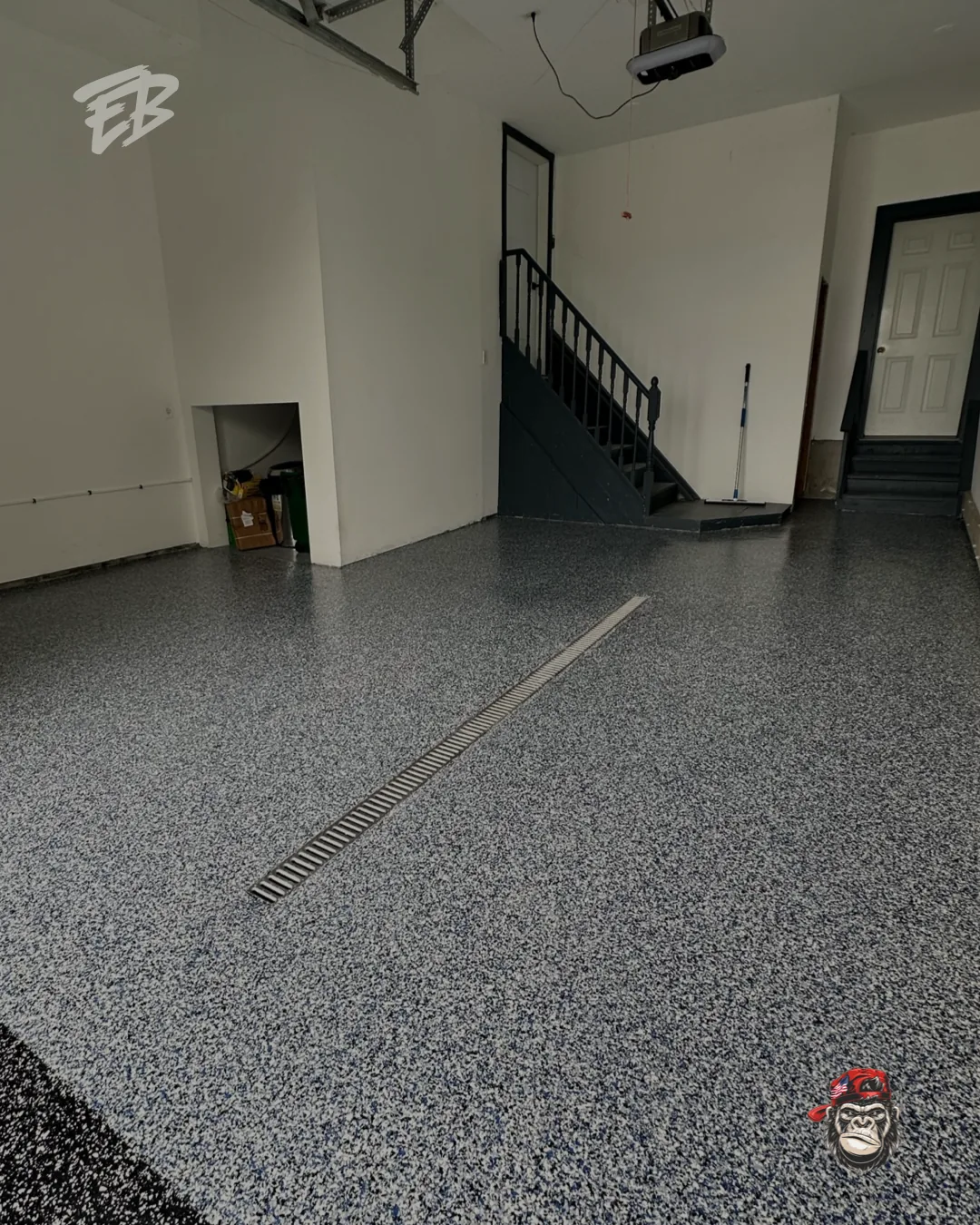
The speckled, multi-tone surface hides dust, tire marks and everyday wear better than any solid color. A plain grey floor shows every footprint. A flake floor absorbs the same traffic visually and still reads as clean.
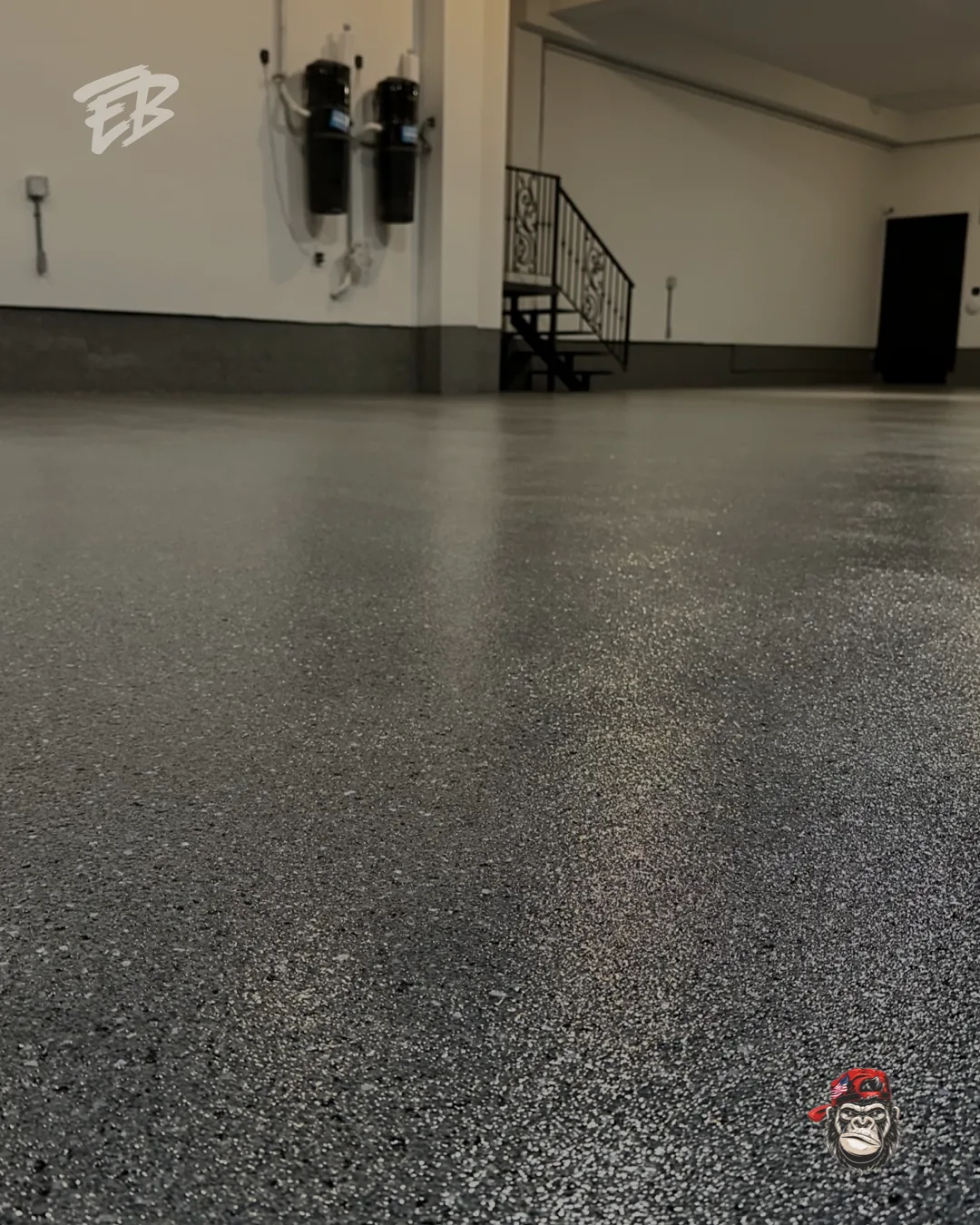
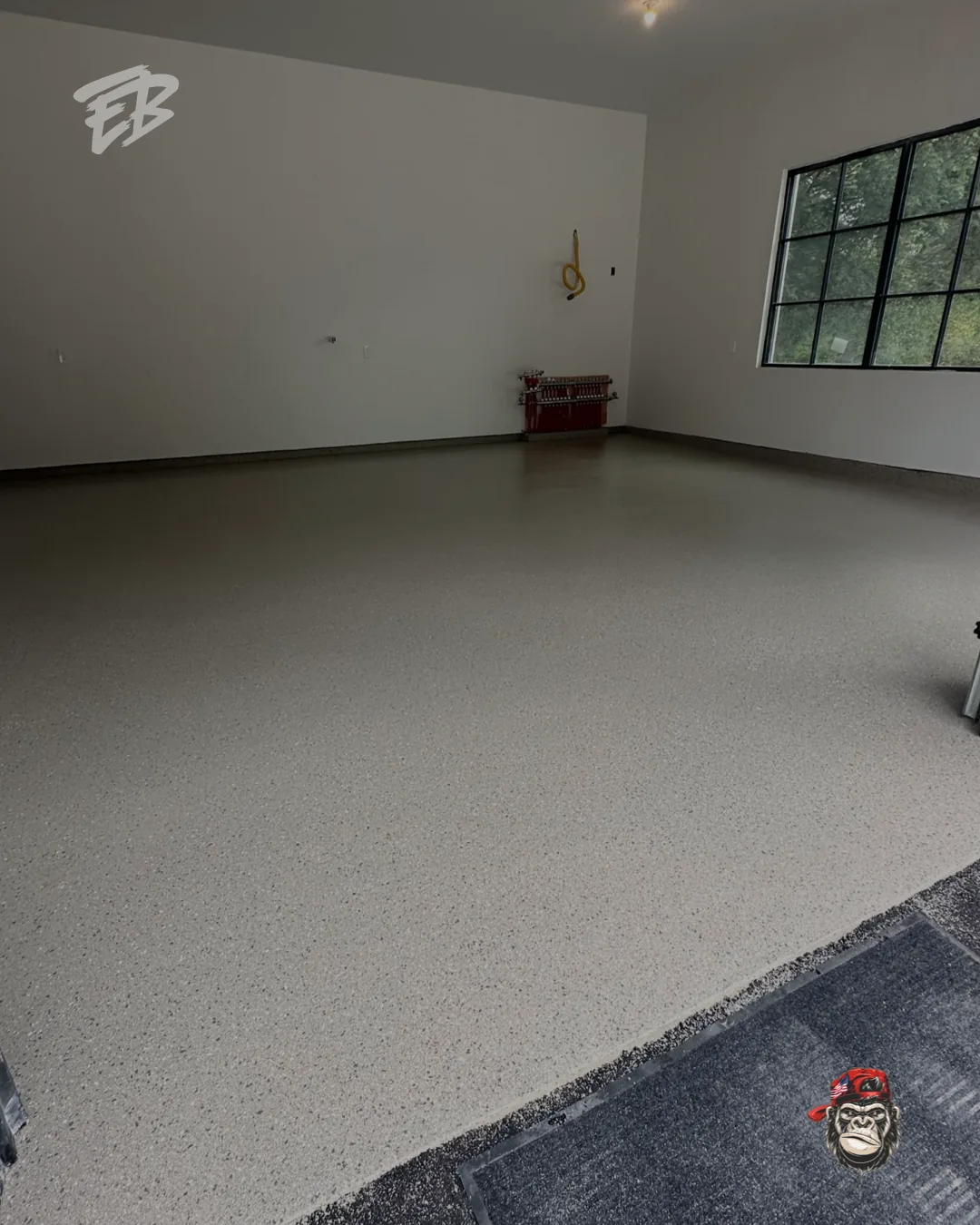
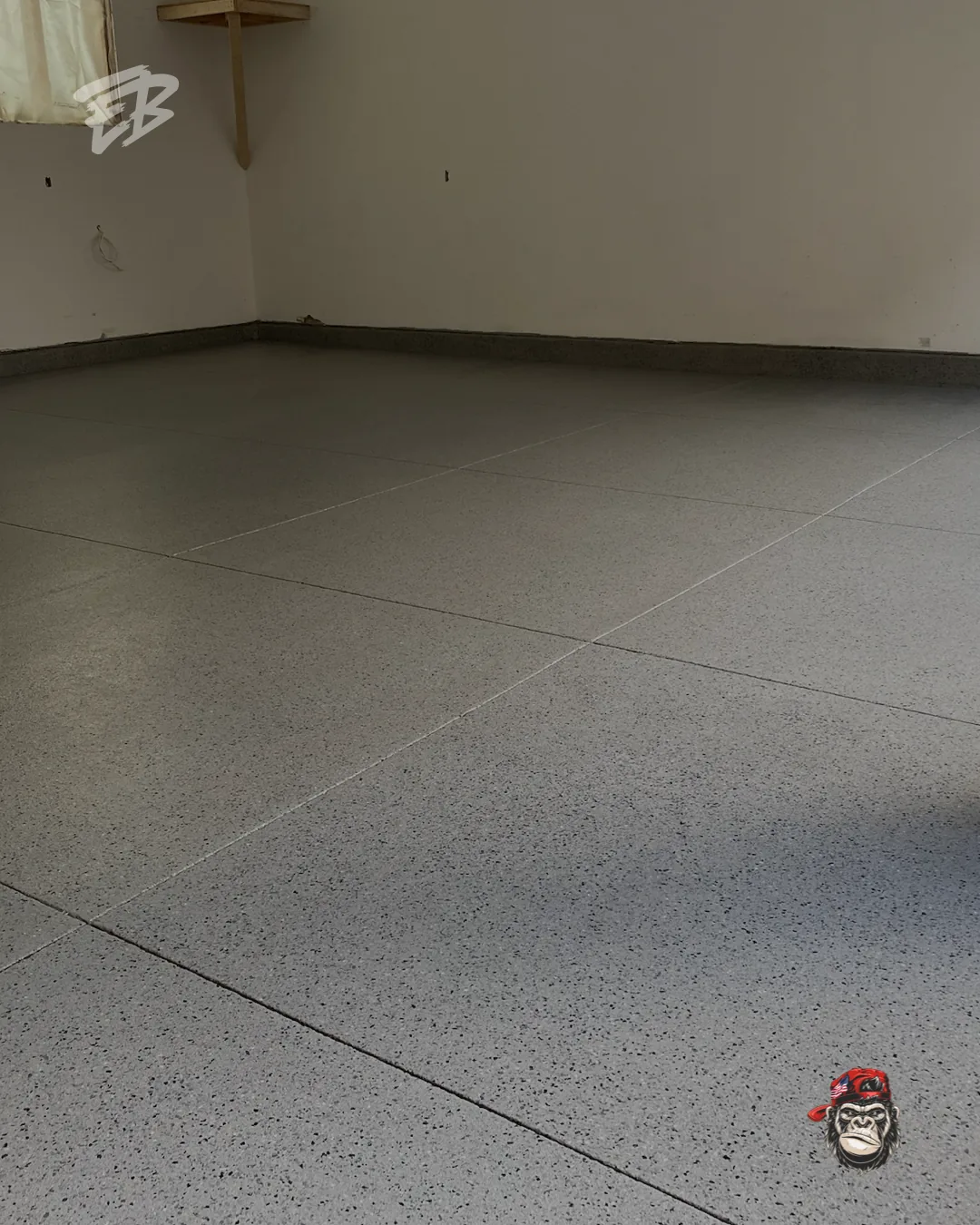
That's the practical argument. The aesthetic one is that you control the blend: flake color mix, chip size and broadcast density are all adjustable, from a fine granite-look speckle to heavy full coverage that reads almost like terrazzo. Gloss level is set by the topcoat — high gloss for a showroom, satin for something quieter.
Where it works
- Garages — the most common application, residential and commercial
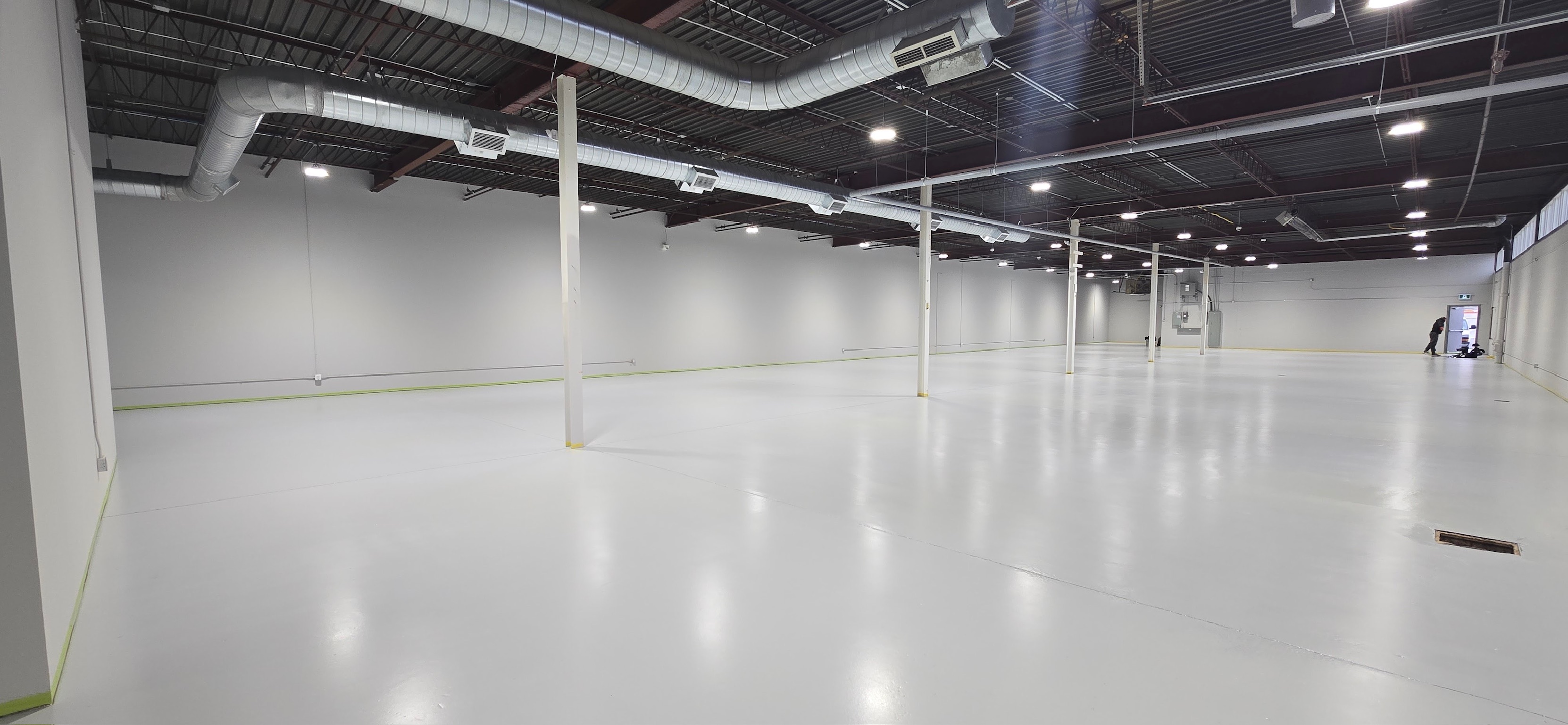
- Showrooms and retail — durable, distinctive, easy to clean
- Commercial kitchens — non-slip, chemical-resistant, hygienic
- Warehouses — handles forklift and pallet traffic
- Locker rooms and wet areas — traction where it counts
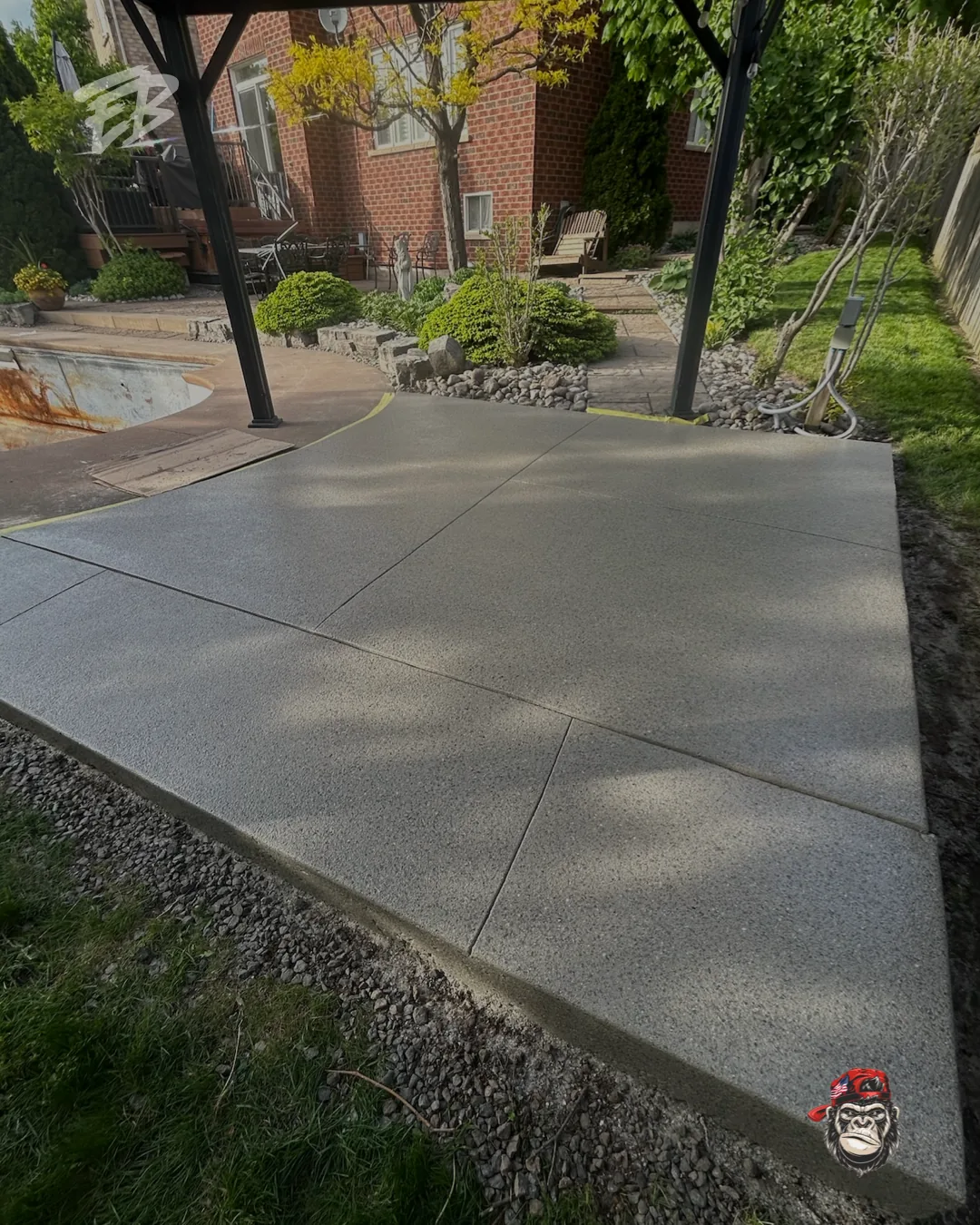
- Patios and lanais — with a UV-stable topcoat specified for full sun
What matters in this climate specifically
UV stability isn't optional. A garage with the door open takes hours of direct sun. Without a UV-stable topcoat, a light floor ambers and chalks within a couple of seasons.
Moisture gets tested before anything is specified. Slab-on-grade construction near the water table drives vapor upward continuously, and older slabs often have no vapor barrier. We measure to ASTM F1869 or F2170 first — above the limit, a mitigation membrane goes down before the base coat.
Install conditions get measured too. Slab temperature, ambient humidity and dew point before each coat. Through the wet season that's what separates a floor that bonds from one that hazes.
The short version
Flake gives you traction, durability, a surface that hides wear, and a look you actually choose rather than accept. It holds up in heat, sun and humidity, and it doesn't ask for maintenance beyond sweeping.
We'll bring physical samples so you can see blends against your own lighting, and we'll test the slab before quoting anything.