Polyurea
Flexible, fast-setting base coat with strong adhesion
4–6 hrs
Indoor & Outdoor
Low VOC
Thank you! Your submission has been received!
Oops! Something went wrong while submitting the form.

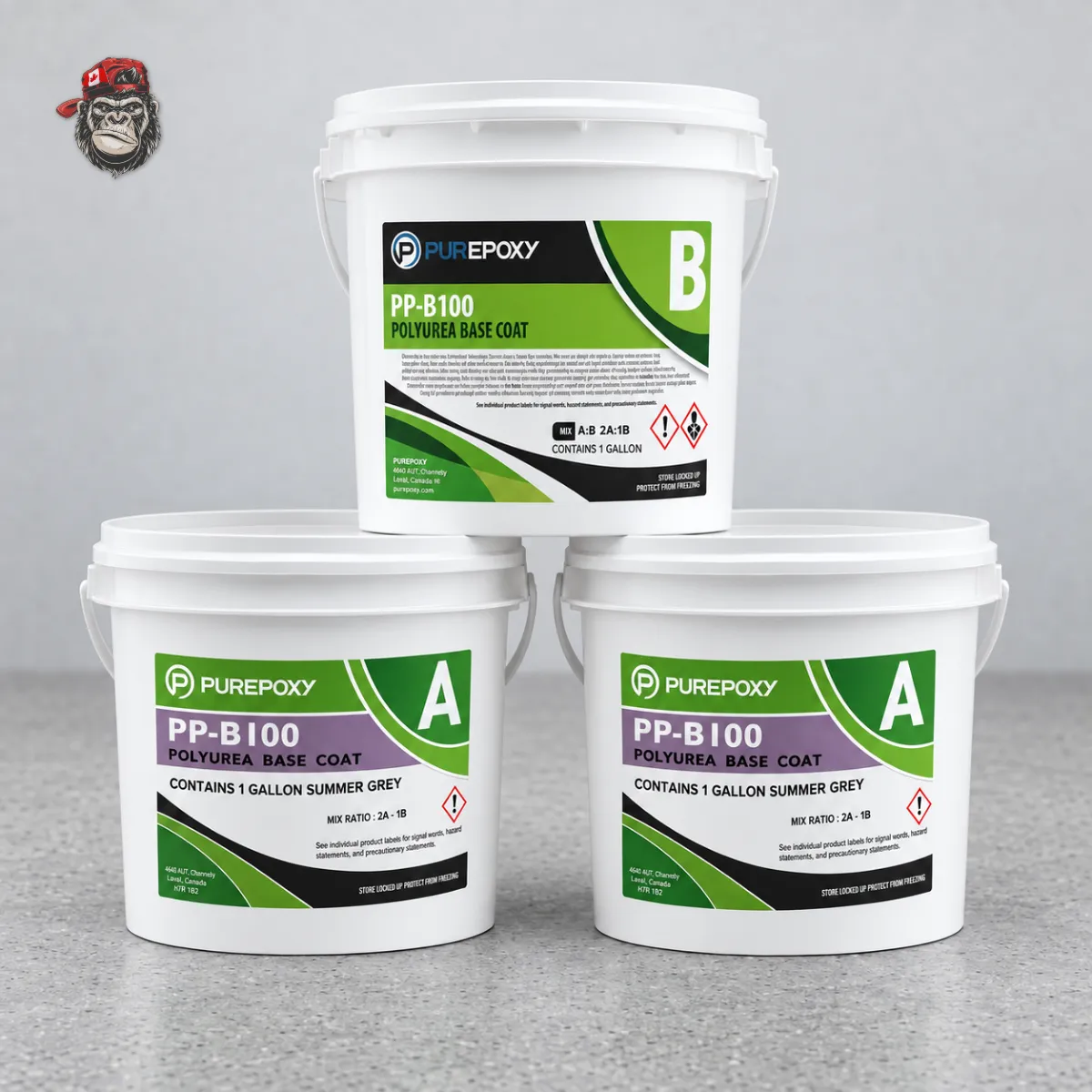
Polyurea is an elastomeric coating formed by the reaction of an isocyanate with an amine resin. We use PP-B100, a 95% solids polyurea hybrid developed as a primer and base coat. It bonds to concrete, wood and block, performs across a wide temperature range and stays flexible as the slab moves. A 35–45 minute pot life allows self-leveling and decorative broadcast, and it emits virtually no odor, so it can be installed in occupied buildings. As a base coat, it is finished with a UV-stable topcoat on sun-exposed floors.
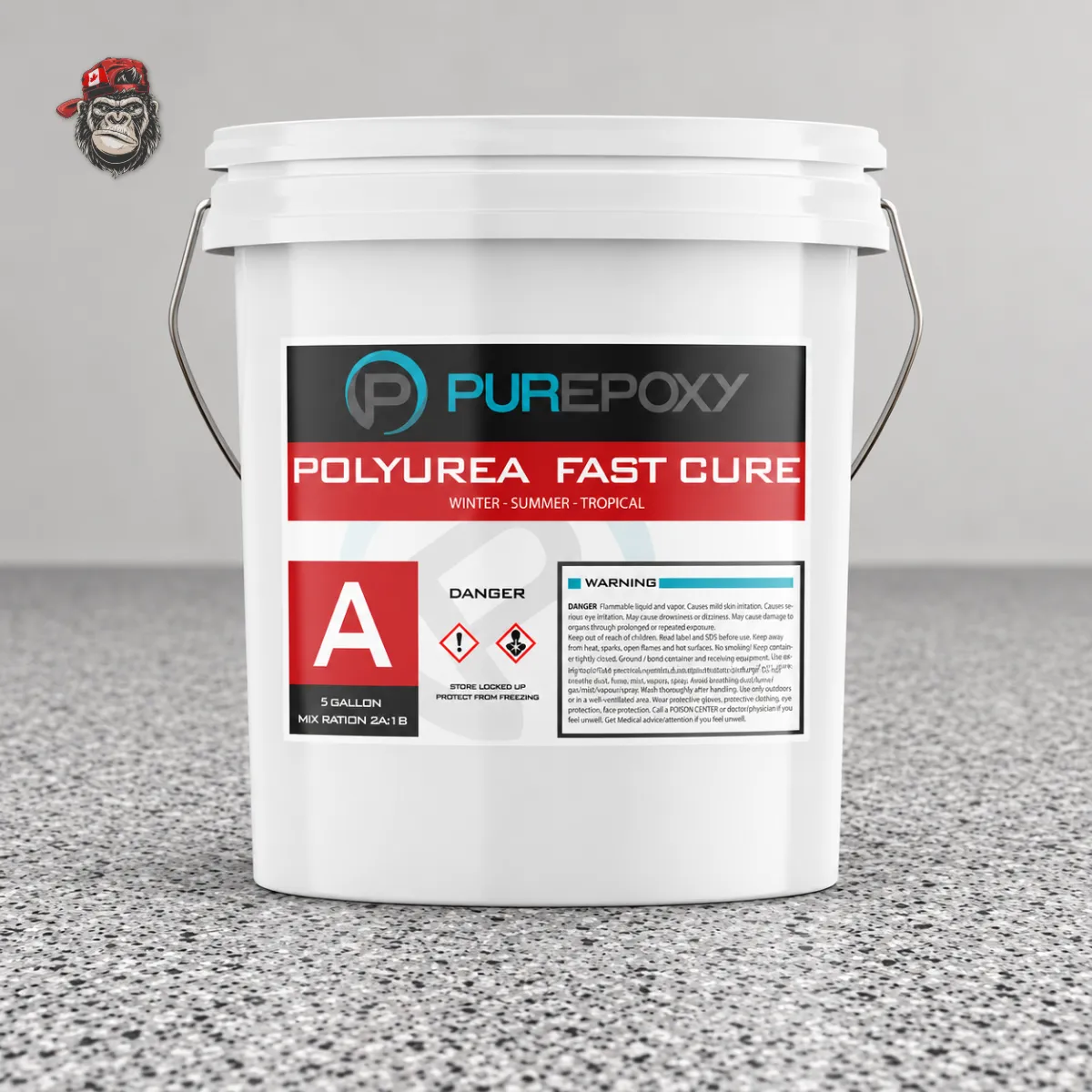
PP-B100 is the fast-setting base coat we use under flake and quartz broadcast floors. It is 100% solids with very low odor, can be topcoated the same day, and bonds strongly to prepared concrete. It is not a finish: in the sun it always goes under a UV-stable polyaspartic topcoat.
As a base coat it is covered by a UV-stable topcoat, so the finished floor holds its color outdoors.
Performs across a wide temperature range and tolerates Florida heat during installation better than standard epoxy.
Not a vapor barrier. On slabs with elevated moisture it goes over a moisture membrane.
Its flexibility absorbs thermal movement on outdoor slabs, which reduces cracking on pool decks and lanais when topped with a UV-stable coat.
It lets us broadcast flake and topcoat on the same day, so the floor goes back into use sooner. On large or slow-turnaround jobs epoxy may be the better value.
No. It is designed as a base for broadcast systems and gets a UV-stable topcoat, especially on garages and outdoor slabs.
The data sheet calls for slab relative humidity under 80% (ASTM F2170). Above that we install a moisture vapor barrier first.