Aliphatic urethane
UV-stable topcoat that won't yellow in the sun
24 hrs
UV-Stable
Indoor & Outdoor
Low VOC
Thank you! Your submission has been received!
Oops! Something went wrong while submitting the form.
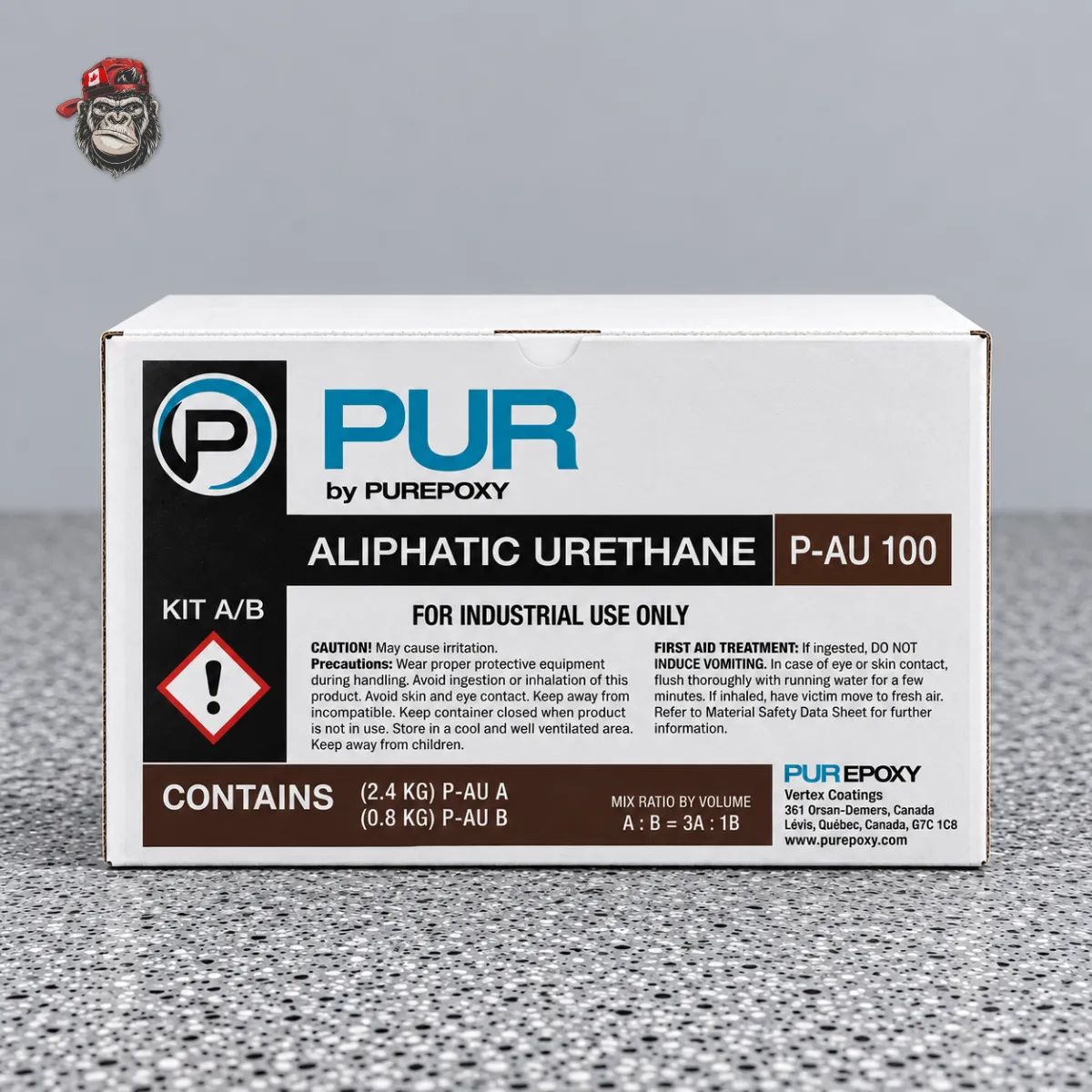
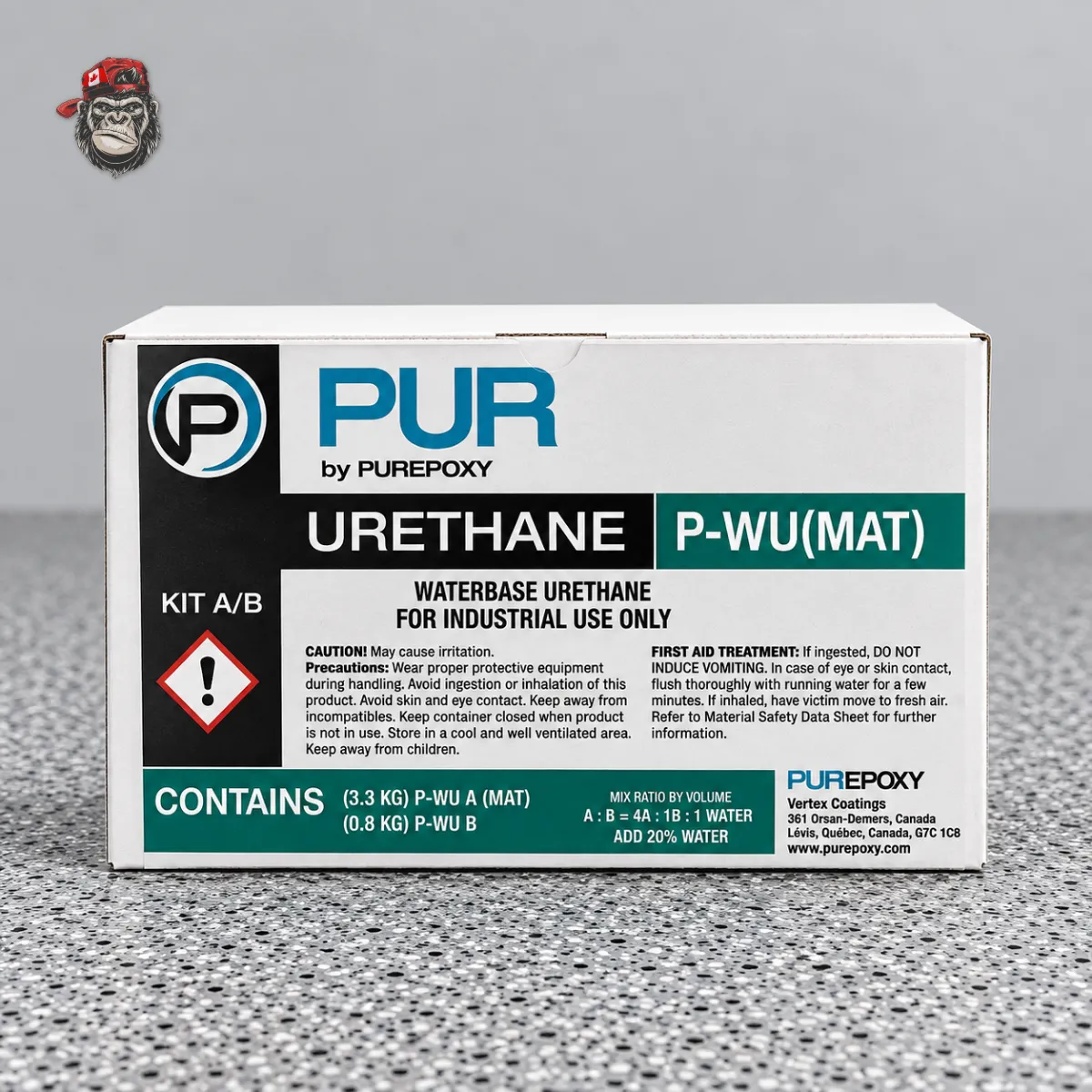
Aliphatic urethane is a UV-stable polyurethane finish coat that holds its color and gloss in direct sunlight. We use P-AU100, a two-component aliphatic polyester polyurethane available in clear gloss, clear satin or pigmented. It resists abrasion, staining, Skydrol hydraulic fluid, betadine and hot-tire marking, and is VOC-compliant at 75.4 g/L. Typical applications include aircraft hangars, industrial kitchens, automotive showrooms, laboratories and healthcare facilities. Installation requires relative humidity below 40% and a moisture barrier on slabs with vapor transmission.
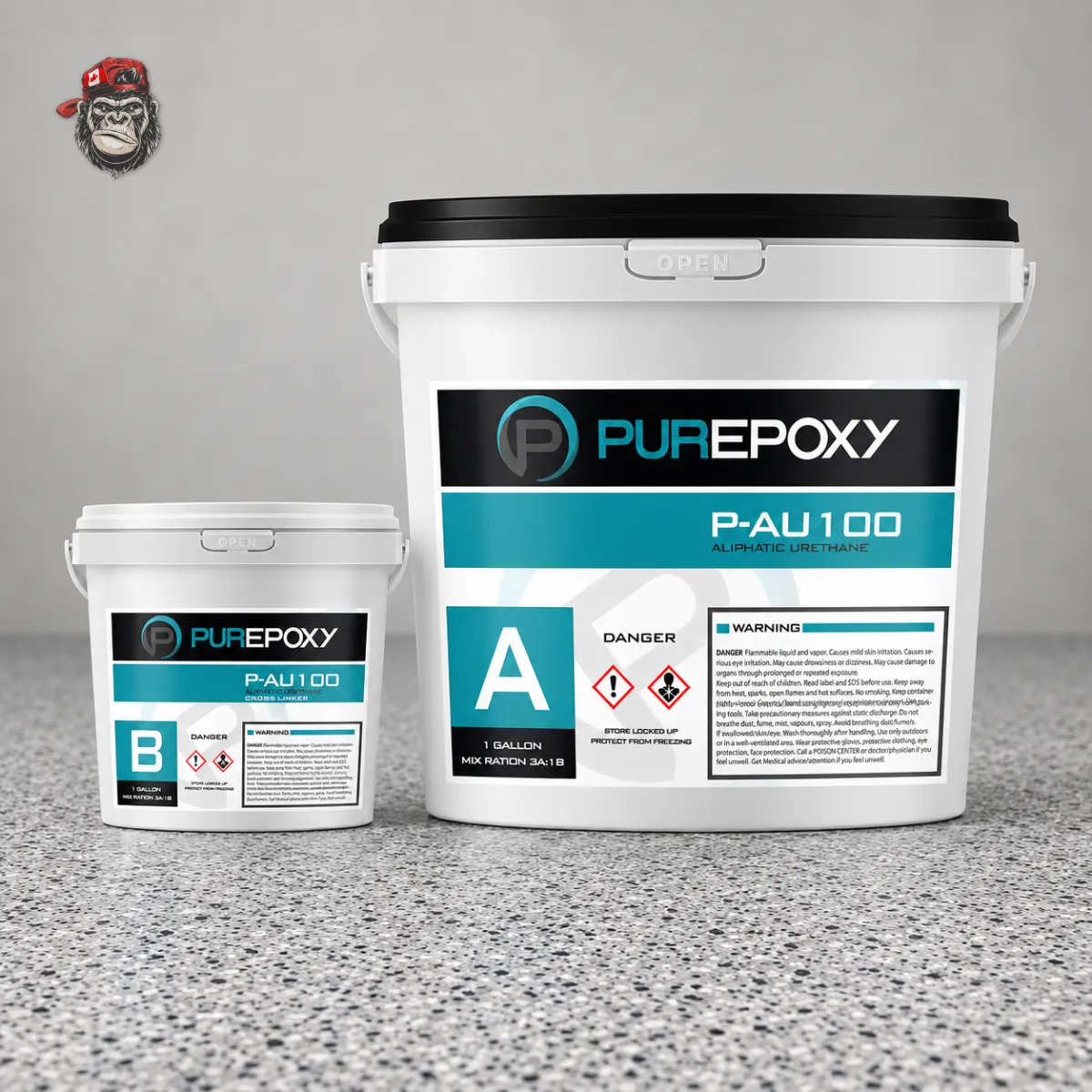
Aliphatic urethane is a thin, very hard topcoat that keeps its gloss and color in sunlight. We roll it over epoxy on showroom, hangar, kitchen and warehouse floors that need the best stain, scratch and hot-tire resistance, with optional aluminum oxide grit for slip resistance.
Light-stable with good gloss retention — built for floors that see direct sun.
Relative humidity must stay below 40% during application and the first 48 hours of cure. In Florida, that means conditioned interiors or carefully chosen weather windows.
Substrate moisture must be under 4%. Without a moisture barrier, hydrostatic pressure can cause detachment.
Resists staining and harsh chemicals, including the cleaners used in coastal commercial facilities.
Aliphatic urethanes are made to resist UV, so they do not yellow in sunlight. Aromatic urethanes are cheaper but yellow outdoors.
No. It is a topcoat and goes over a primed or epoxy-coated floor.
It is applied at 3–4 mils per coat by design. Its value is surface hardness and stain resistance, while the epoxy underneath provides the build.