Epoxy

Hard-wearing base coat for indoor floors
24–48 hrs
Indoor
100% Solids

Get a Free Floor Assessment

Choose the service you're interested in, leave your name and phone number, and add a photo of your floor if you like. We'll get back to you within one business day.

Which service are you interested in?

Max file size 10MB.
Uploading...
fileuploaded.jpg
Upload failed. Max size for files is 10 MB.
Thank you! Your submission has been received!
Oops! Something went wrong while submitting the form.

About

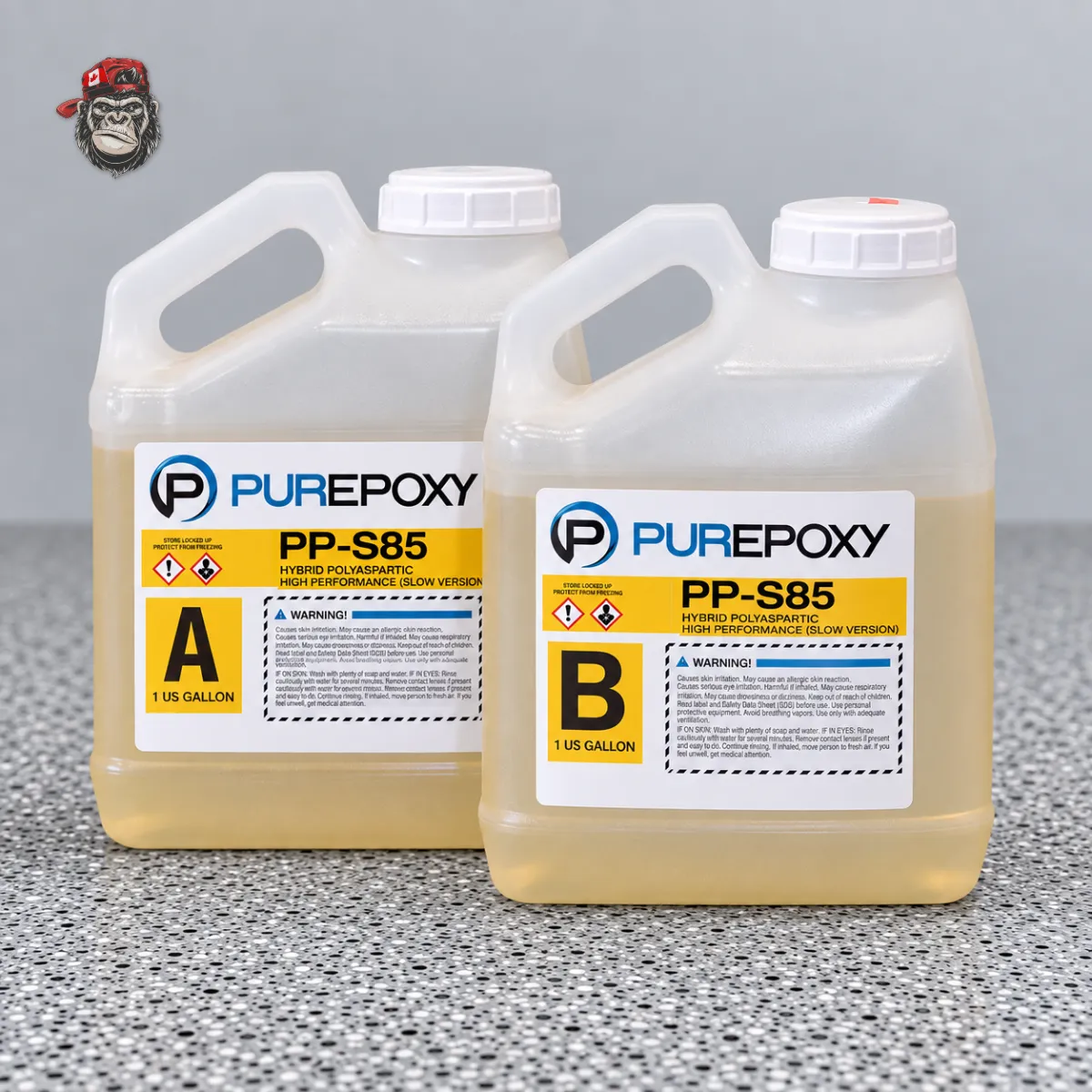
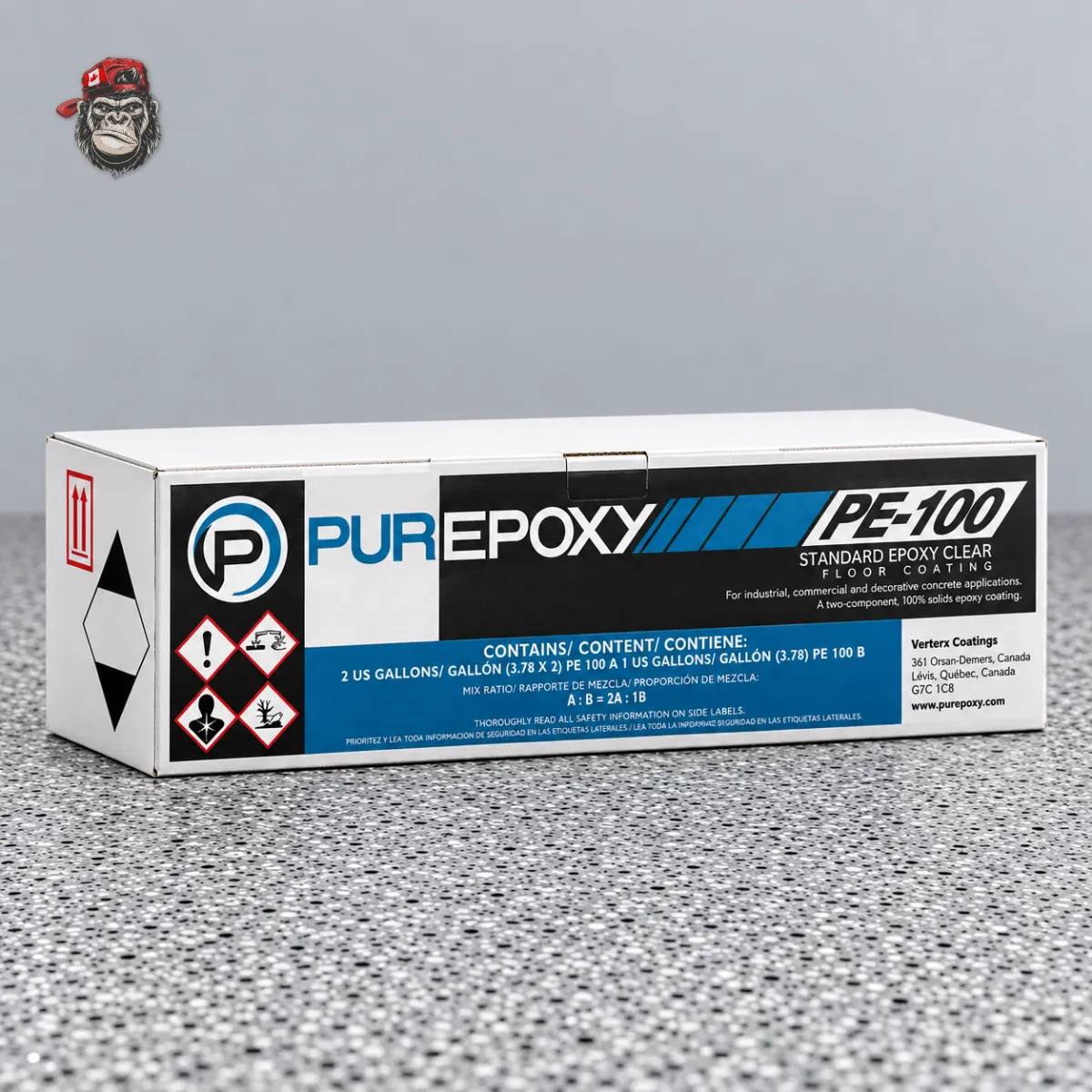
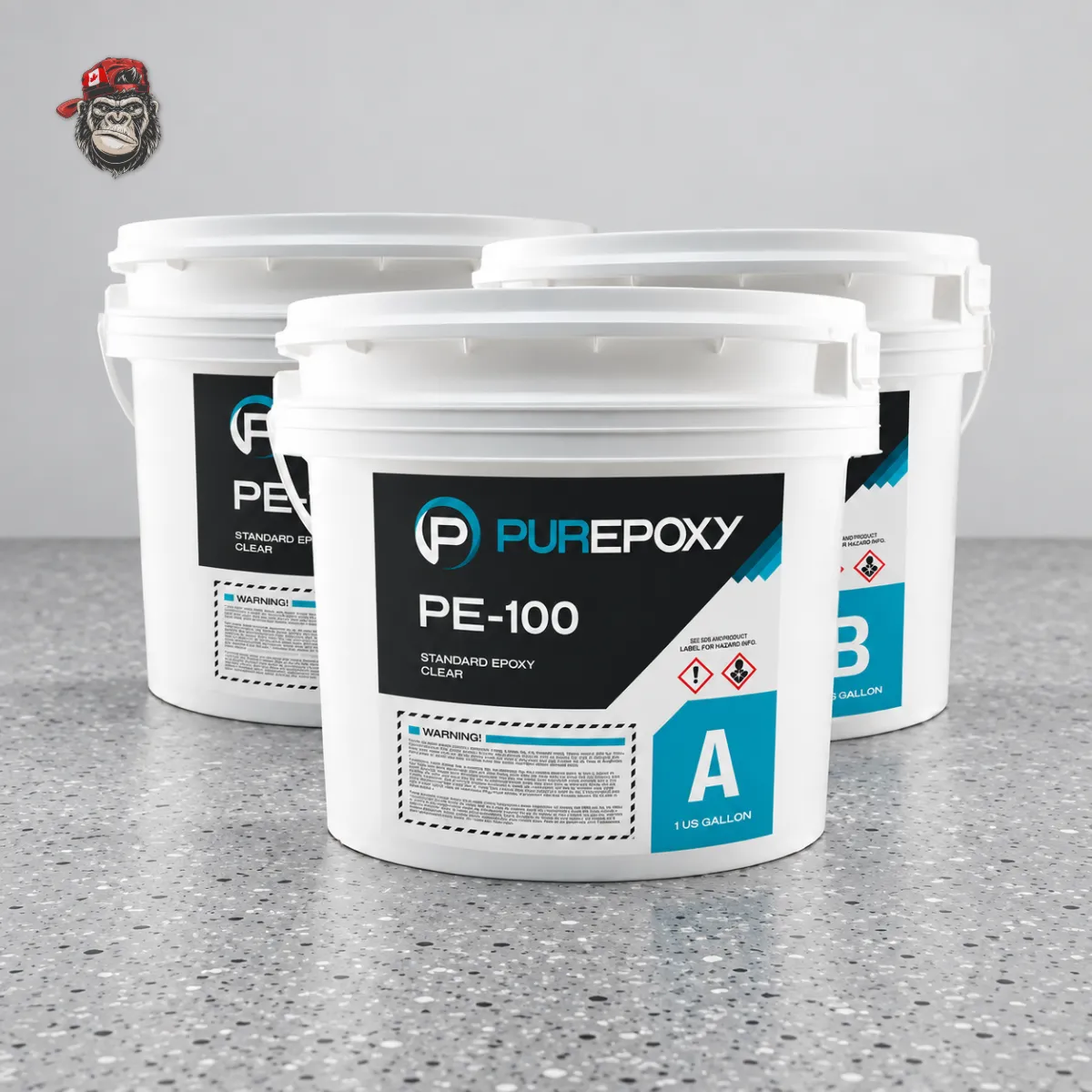
Epoxy is a two-component resin system that cures into a hard, dense layer bonded directly to prepared concrete. We use PE-100, a solvent-free epoxy, as the primer, base and body coat in most indoor systems — flake, quartz, solid-color and metallic floors. Its dense surface resists bacteria, moisture and common chemicals such as oil and cleaners, and it can be applied in multiple layers with full adhesion between coats. Epoxy is not UV-stable: in direct sunlight it ambers, so sun-exposed floors always receive a UV-stable topcoat.
At a Glance

The numbers that decide your schedule, from the manufacturer's data sheet
In short

Epoxy is the hard, 100% solids resin we bond directly to ground concrete as the primer, base and body coat of most indoor systems: flake, quartz, solid color and metallic. It is strong and affordable, but it ambers in sunlight, so any floor that sees sun gets a UV-stable polyaspartic or urethane topcoat.

Product we install
PurEpoxy PE-100 (100% solids)
Role in the system
Primer, base and body coat
Walk on it
24 h at 68°F · 16 h at 86°F
Drive on it
Light traffic after 3 days at 68°F
Next coat
12 h to 2 days at 68°F
Full cure
7 days at 68°F · 5 days at 86°F
Thickness
10 mils primer · 13–16 mils finish · 40 mils metallic
VOC
75.4 g/L
Install conditions
Slab 50–86°F · RH up to 85% · slab moisture under 4%
Lab performance
Shore D 85–90 · Taber loss 0.10 g · bond over 300 psi (concrete fails first)
Read the manufacturer's data sheet →

Right Fit

Best For

Two Car
Food Manufacturing Plants
Pallet Racking
Laboratory Floors
Mechanical Room

Not For

  • Direct sun. Pool decks, patios and driveways — epoxy ambers under UV and needs a UV-stable topcoat outdoors.
  • Fast turnarounds. Plan on 24–72 hours before foot traffic and several days before vehicles.
  • Damp slabs. High-moisture concrete needs a moisture barrier first.

Built for South Florida

How this material handles sun, humidity, damp slabs and coastal air

Sun & Heat

Not UV-stable. Indoors it performs well; any area with direct sun needs a polyaspartic or aliphatic urethane topcoat to prevent ambering.

Humidity

Cure slows in high humidity and the surface can blush. We install in controlled conditions and check the dew point before each coat.

Slab Moisture

Sensitive to vapor rising through the slab. We test every slab and install a moisture membrane where readings are high.

Salt Air & Pools

Not recommended for pool decks or coastal exteriors. Indoors, it resists salt residue tracked in from outside.

How It Compares

Most floors use two or three of these together. Here is what each one is for.
MaterialJob in the systemSun-stableWalk on itBest for
EpoxyPrimer, base and body coatNo, needs a topcoatAbout 24 hIndoor flake, solid and metallic floors
PolyasparticTopcoatYes2–4 hGarages, patios, pool decks
Fast base coatBase under flake or quartzNo, needs a topcoatAfter the topcoatSame-day broadcast floors
Aliphatic urethaneThin, hard topcoatYes24 hShowrooms, hangars, kitchens
PolyurethaneProtective finish over epoxyYes (aliphatic grade)24 hLabs, kitchens, shops
Water-based urethaneClear interior topcoatIndoor use12–24 hOffices, retail, occupied buildings
Moisture membraneUnder-layer on damp slabsCovered by the system6–8 hSlabs with rising moisture

Not sure which combination your floor needs? We grind a test area, check slab moisture and recommend the system in writing.

Get a free floor assessmentTry the floor visualizer

Common Questions

Can epoxy be used outdoors in Florida?

Not on its own. Epoxy ambers and chalks under UV light, so on patios, pool decks or garages with open doors we cover it with a UV-stable polyaspartic or aliphatic urethane topcoat.

How long before I can walk and park on an epoxy floor?

The data sheet allows foot traffic after about 24 hours at 68°F and light traffic after about 3 days, with full cure in about 7 days. Warmer slabs cure faster; we give you the exact schedule for your job.

Why do epoxy floors peel?

Most failures come from poor preparation or moisture rising through the slab, not from the resin. We diamond-grind the concrete and test slab moisture before any coat goes down.

Is epoxy the same as a garage floor paint kit?

No. Store kits are thin, often water-based coatings. A 100% solids epoxy like the one we use builds a thick film that bonds strongly enough for the concrete to fail before the bond does in pull tests.
Ready to Upgrade Your Floors?

Custom epoxy systems tailored for garages, pool decks, showrooms, patios, and industrial environments — combining industrial-grade durability with premium aesthetics.