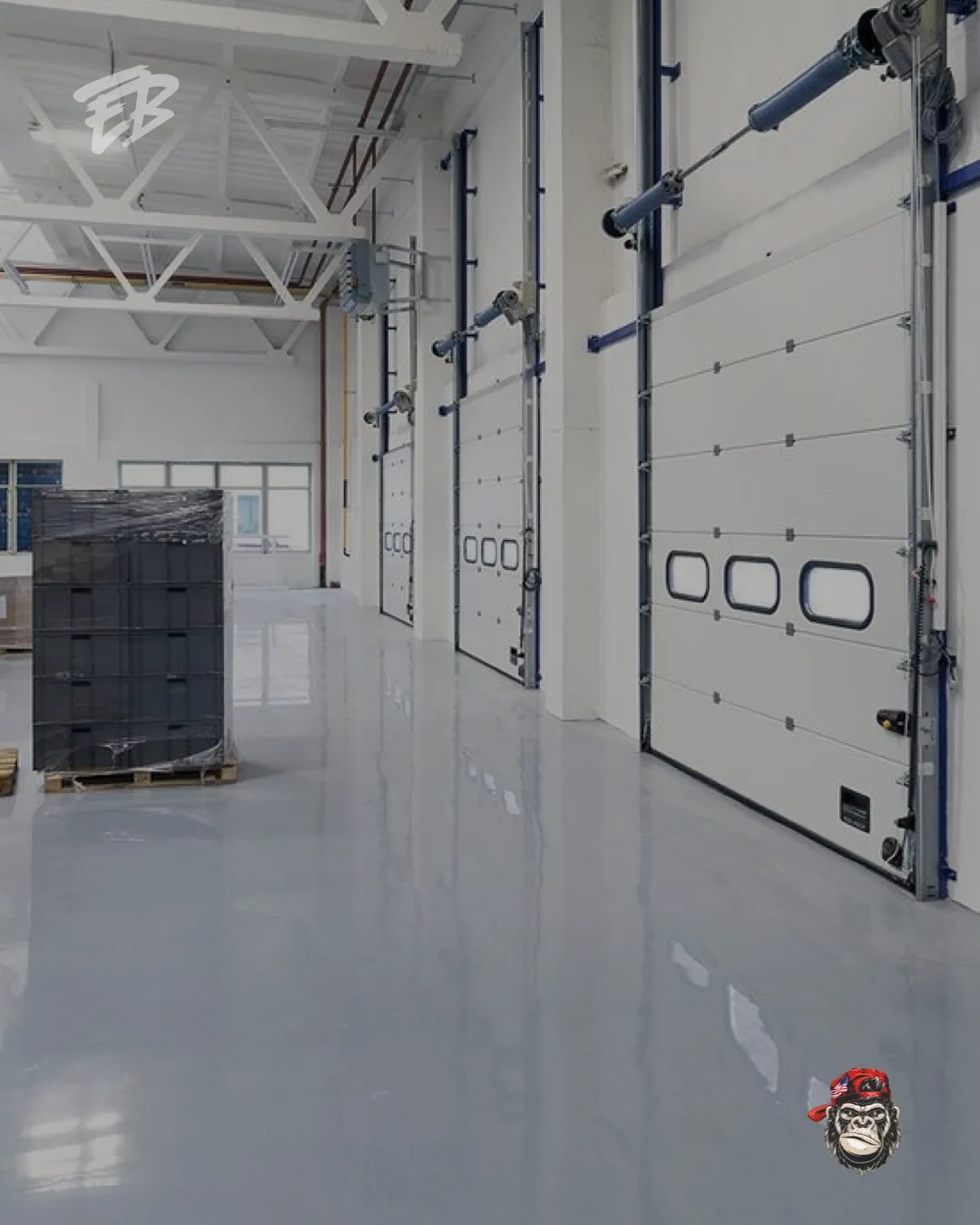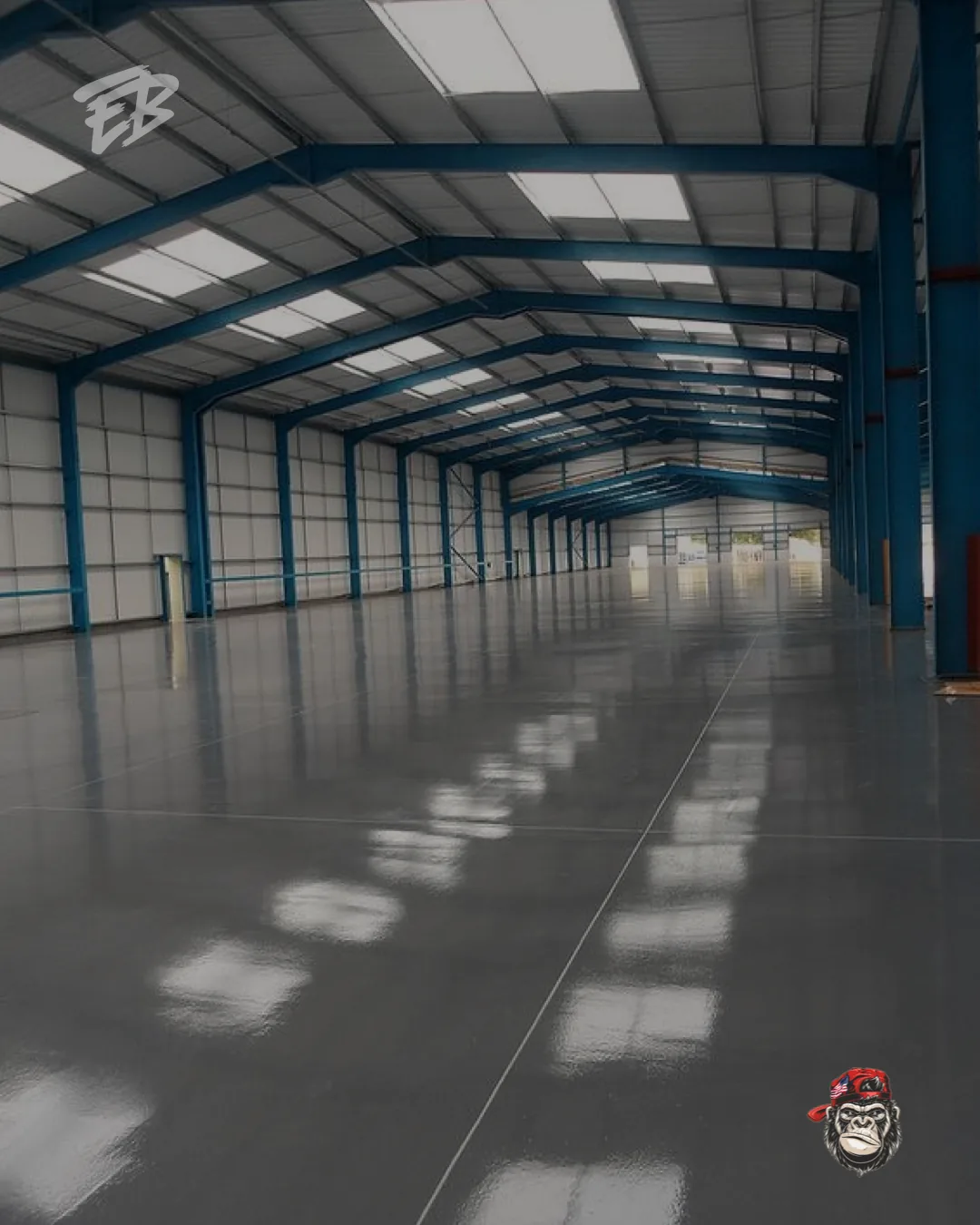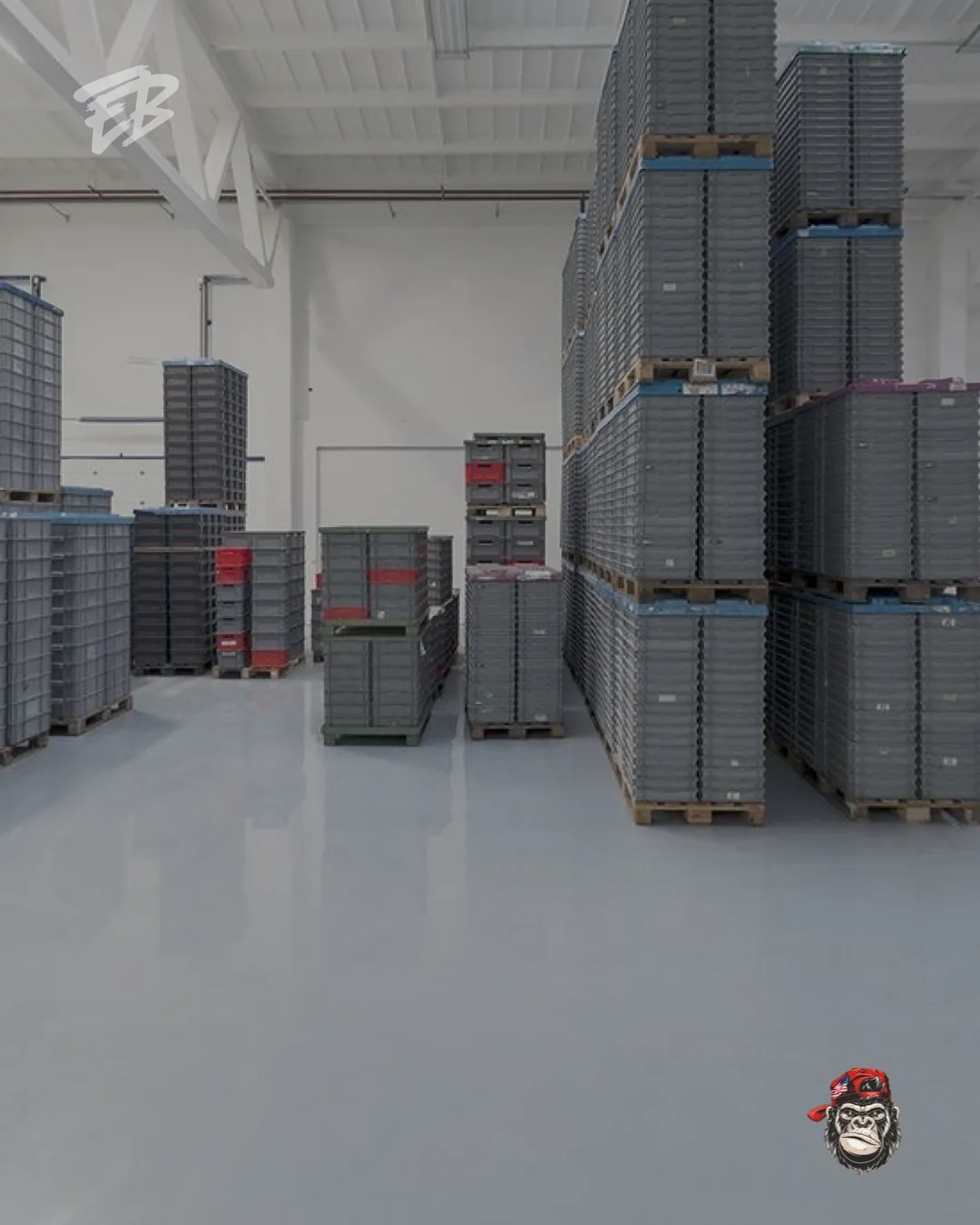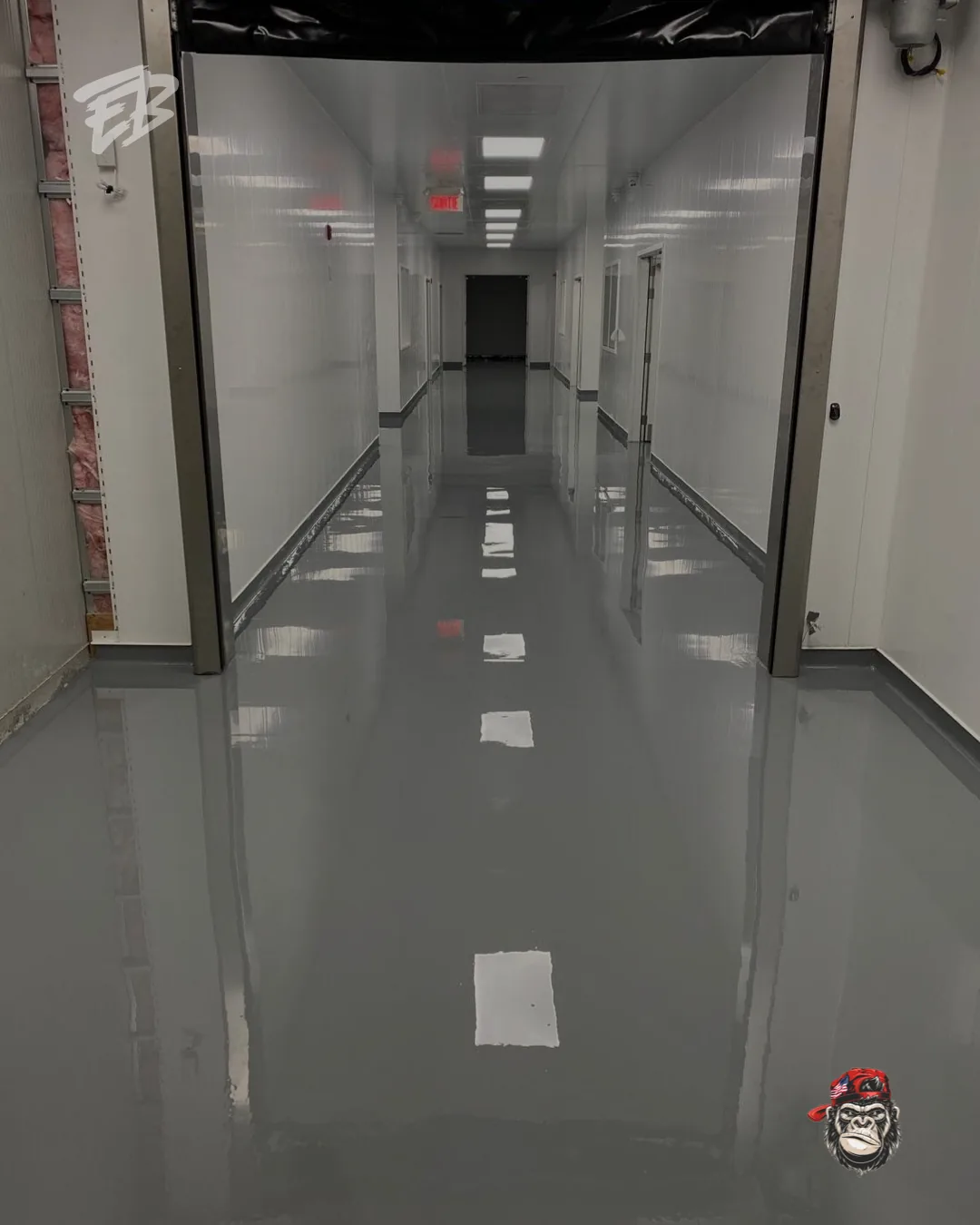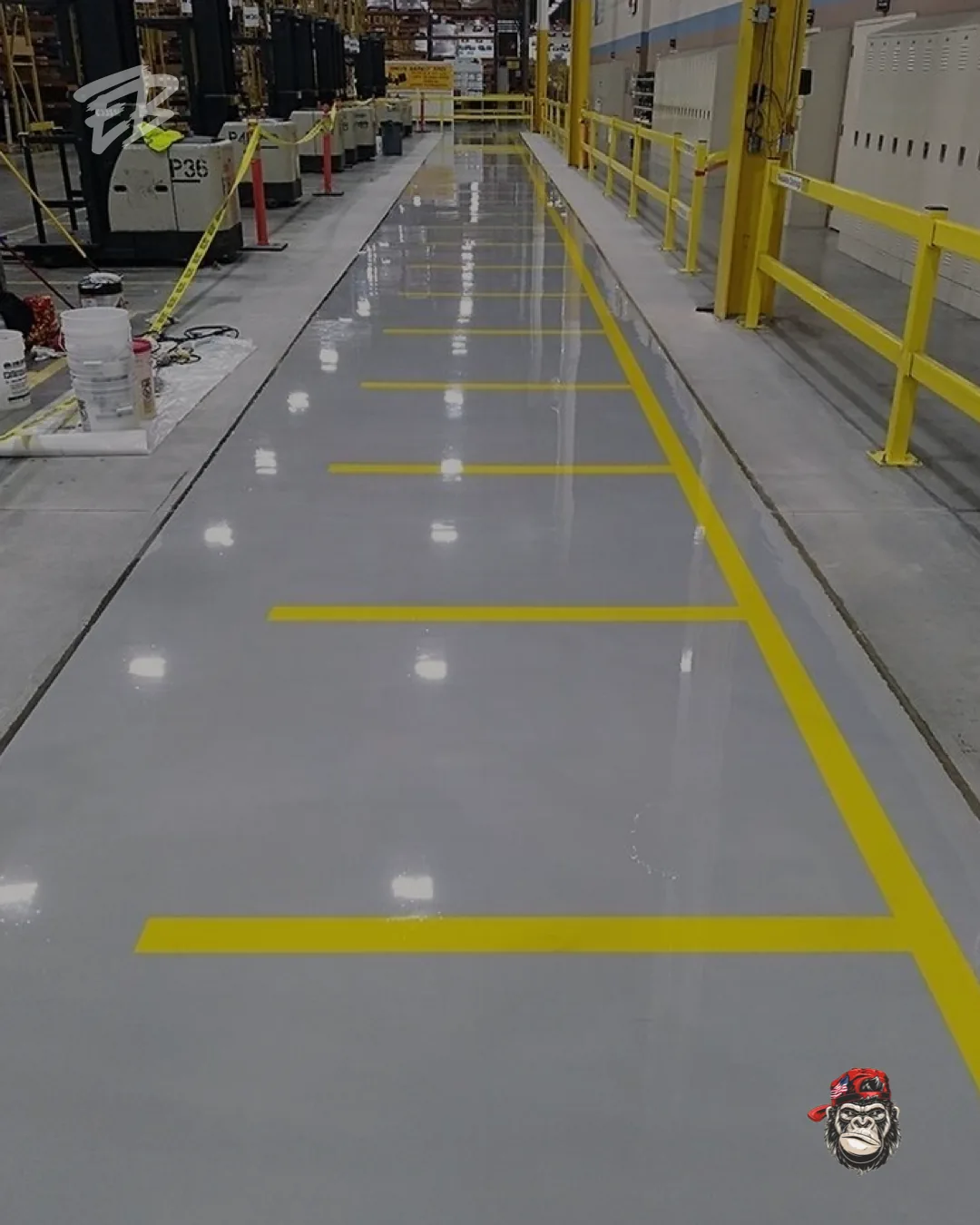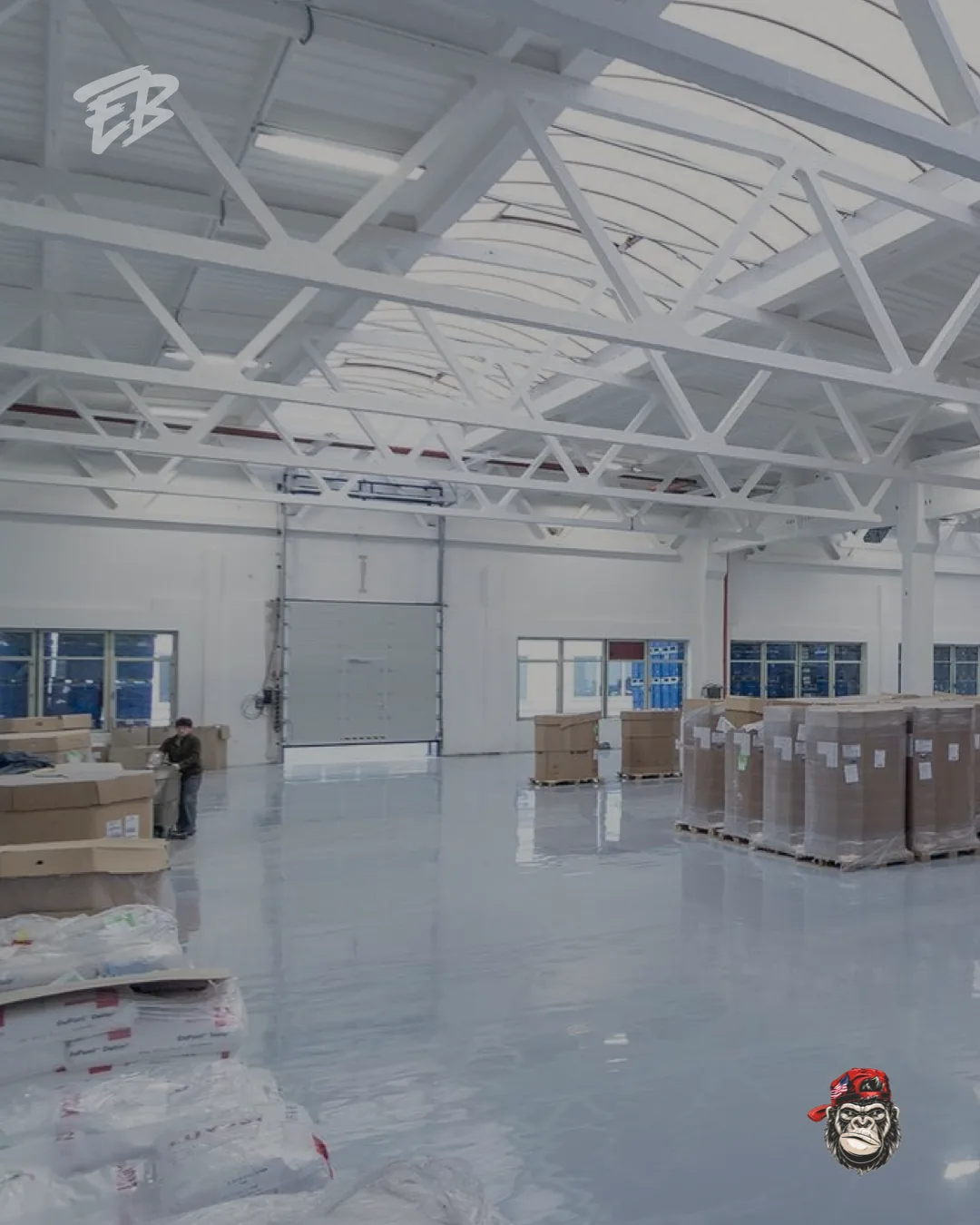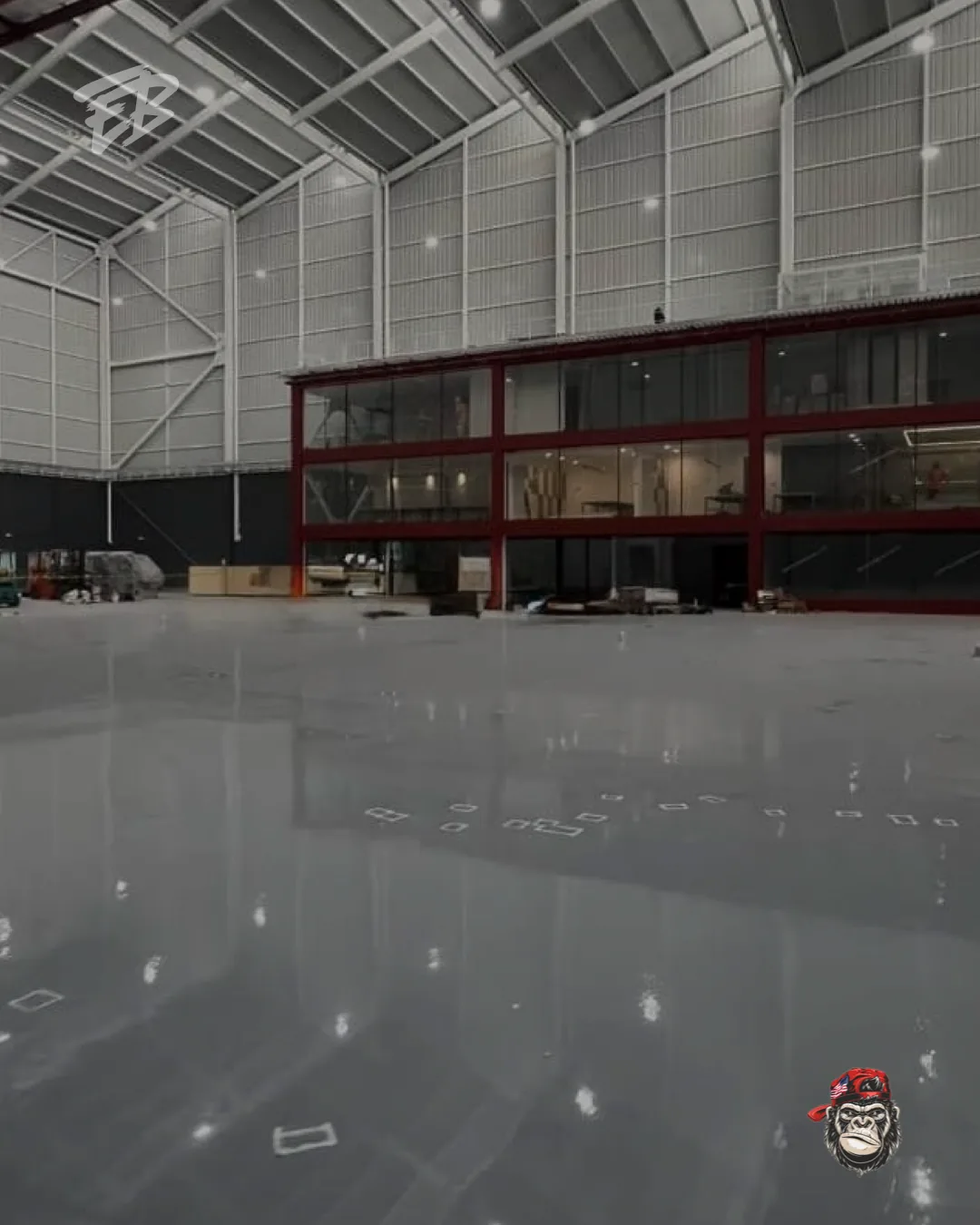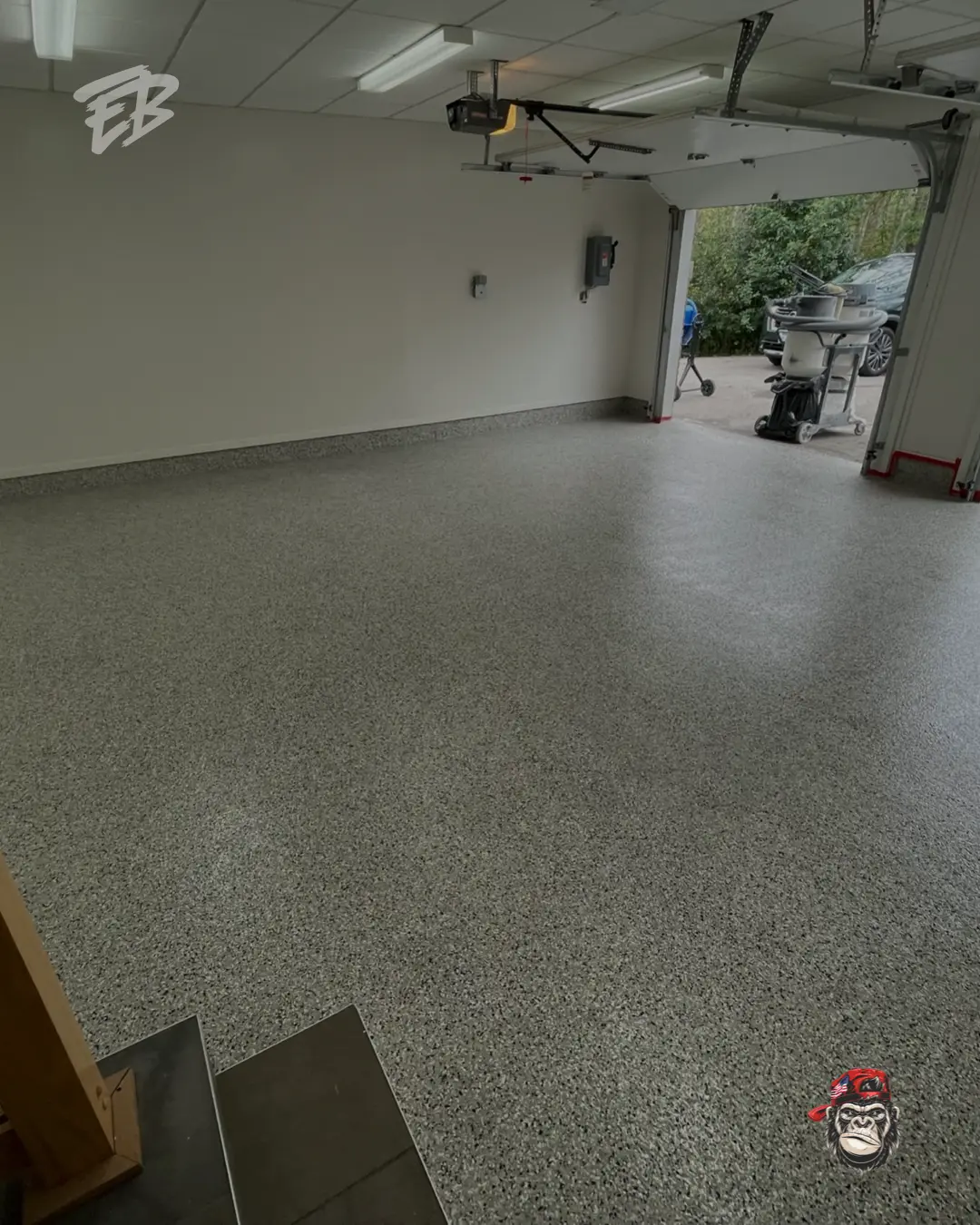
The weakest point in any coated floor
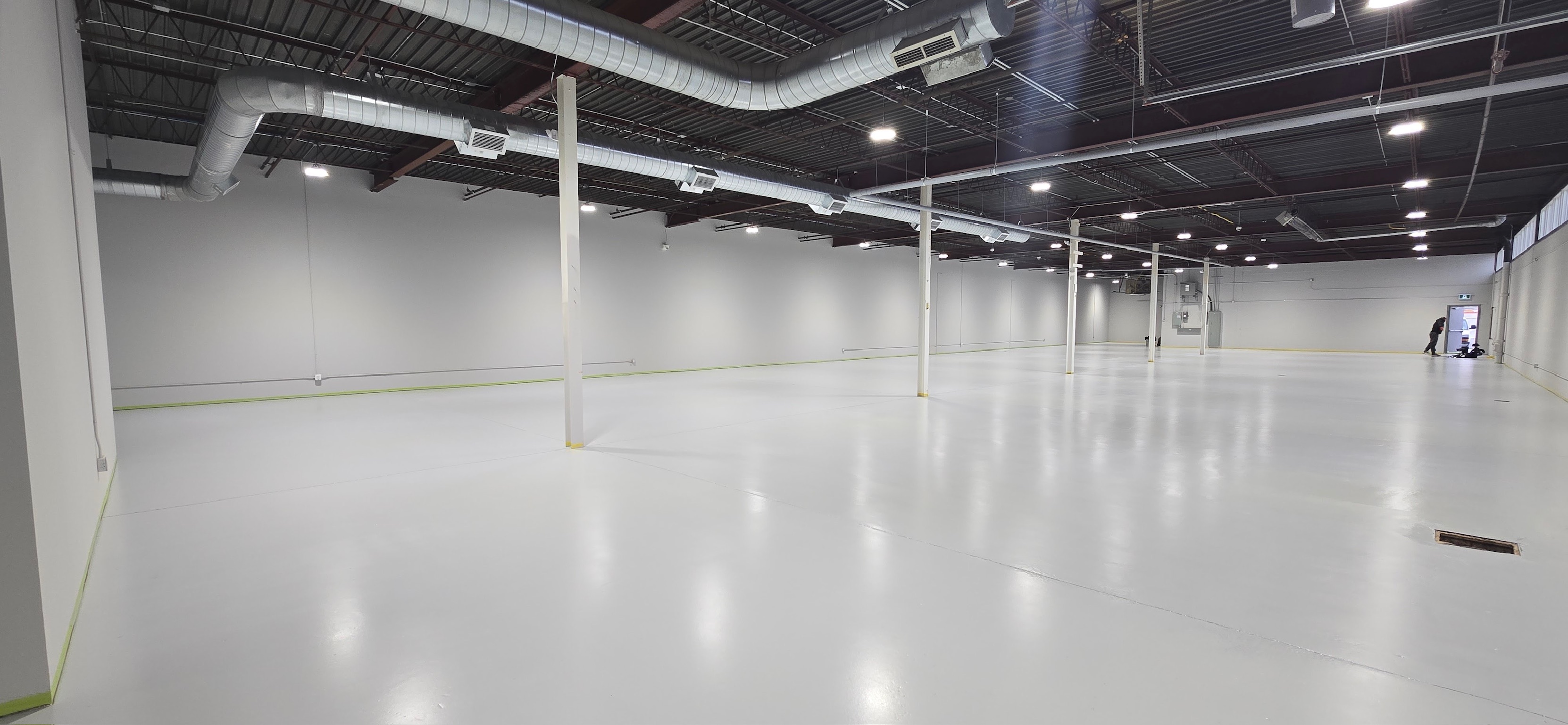
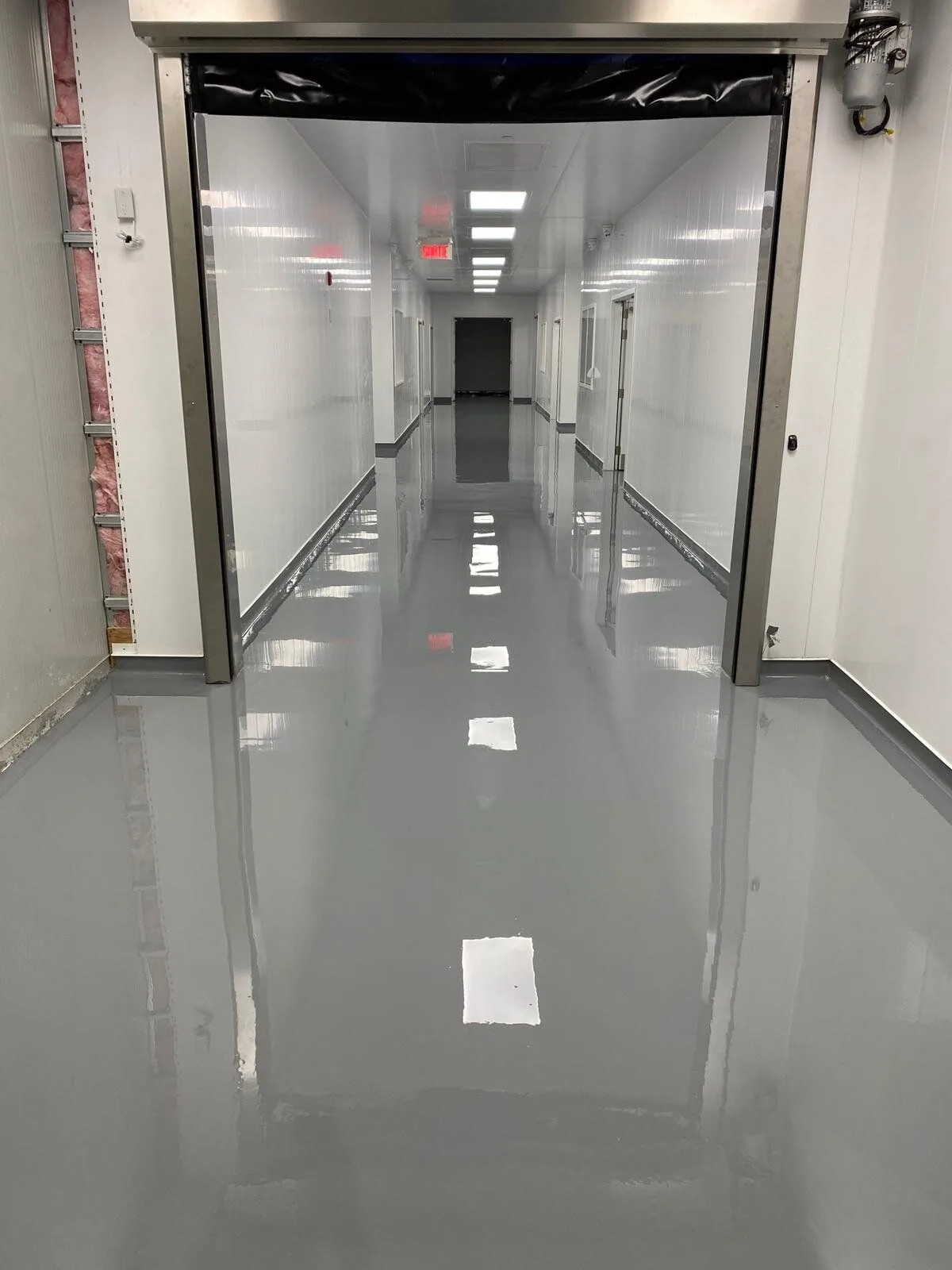
In standard construction, the floor meets the wall at a sharp ninety-degree angle. That corner traps dirt, moisture, bacteria and chemical residue, and it is almost always where a coating starts to fail. Epoxy coving replaces the angle with a smooth, continuous radius, turning floor and wall base into a single sealed system.
Why the perimeter is where systems fail
Bare concrete is porous. Moisture and contaminants penetrate into the slab, build internal pressure and lead to cracking and surface deterioration. When a coating is applied without addressing that, the system becomes vulnerable to delamination, peeling and blistering — and the perimeter is where it begins, because that's where the coating terminates.
Coving seals that termination. It removes the entry point where moisture migrates beneath the coating, which matters because excess moisture vapor is among the leading causes of flooring system failure, along with mold growth, adhesive breakdown and expensive repairs.
What this means in South Florida specifically
The stress here is not freeze-thaw. It's persistent moisture.
Vapor drive from below. Slab-on-grade construction close to the water table pushes moisture upward continuously, and older slabs often have no vapor barrier at all. A sealed perimeter keeps that vapor from finding the easiest path out — the edge of the coating.
Humidity and wash-down. In commercial kitchens, food production and wash-down areas, water sits against the base of walls daily. An open joint there is a reservoir.
Salt-laden air near the coast. Airborne chloride accelerates degradation anywhere it can settle and concentrate, and an unsealed floor-wall joint is exactly such a place.
Where coving is a compliance requirement
In commercial kitchens, food production plants, pharmaceutical facilities and healthcare environments, coving stops being a durability upgrade and becomes a regulatory matter. Standards in these industries require surfaces that are non-porous, easy to clean and resistant to contamination. A sharp floor-wall joint cannot meet that — it cannot be fully cleaned, and inspectors know it.
Mechanical protection, not just sealing
The base of a wall takes the most abuse in any working building. Carts, pallet jacks, equipment and daily operations strike it repeatedly, chipping concrete and damaging coatings. A properly installed cove reinforces that transition zone and distributes impact stress across a larger area instead of concentrating it on an exposed edge.
It only works over proper preparation
Epoxy bonds to concrete both mechanically and chemically, but only when the substrate is opened up first. Diamond grinding to the specified profile and full crack repair are what let the system become part of the slab rather than a layer sitting on top of it. Without that step, even premium materials fail early — and coving extends that same standard of preparation up the wall.
This is why cove base is not a decorative detail. It's a functional component that directly determines how long the entire floor system lasts.