The largest slab you own, and the least protected
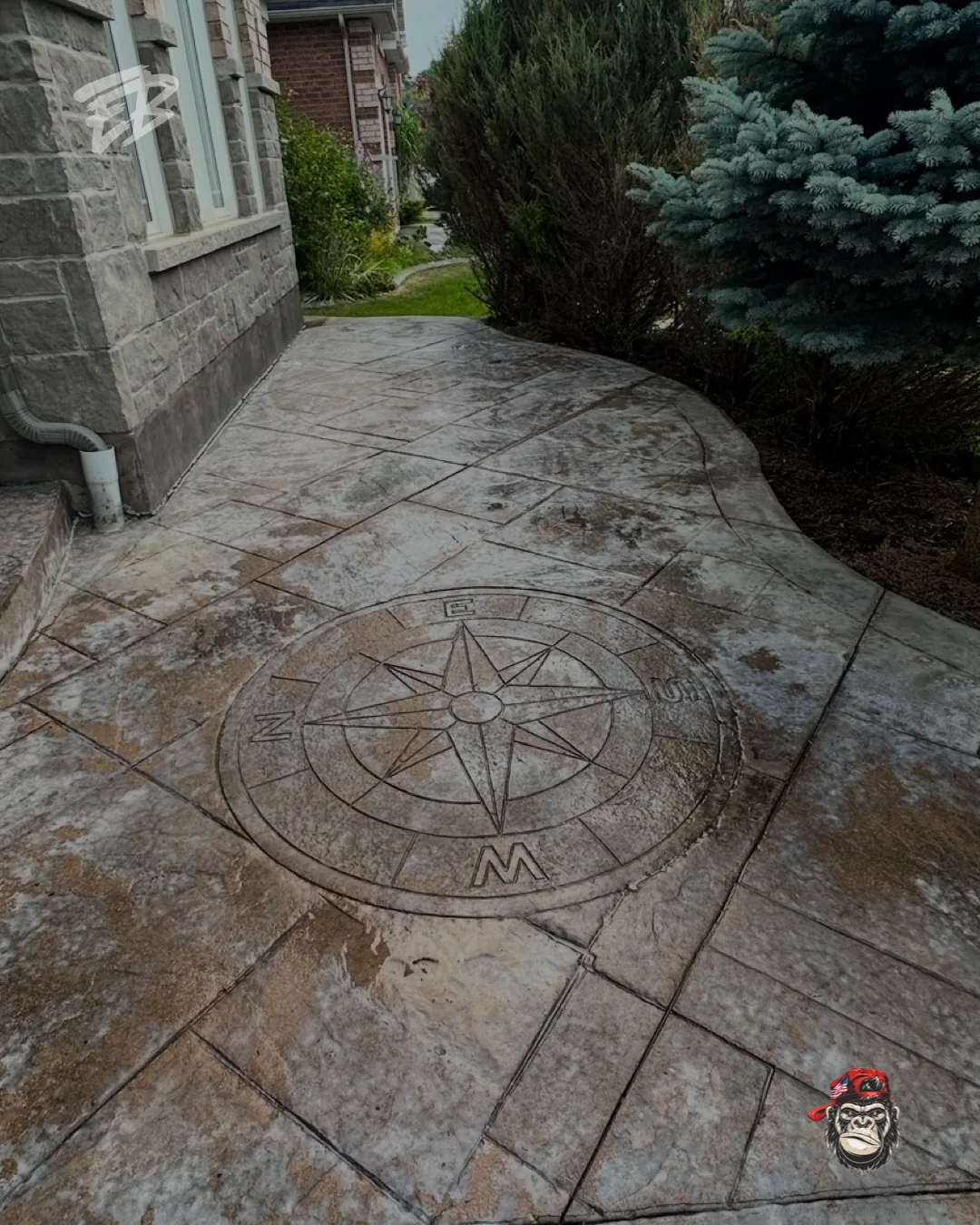
A driveway is usually the biggest piece of concrete on a residential property, and the only one exposed to everything at once: direct sun all day, rain that pools in low spots, vehicle fluids, hot tires and, in this climate, biological growth that darkens the surface within a season.
Coating or sealing it works. Doing so without proper mechanical preparation does not — and exterior slabs are far less forgiving than a garage floor, because nothing about the exposure lets up.
What shot blasting actually does
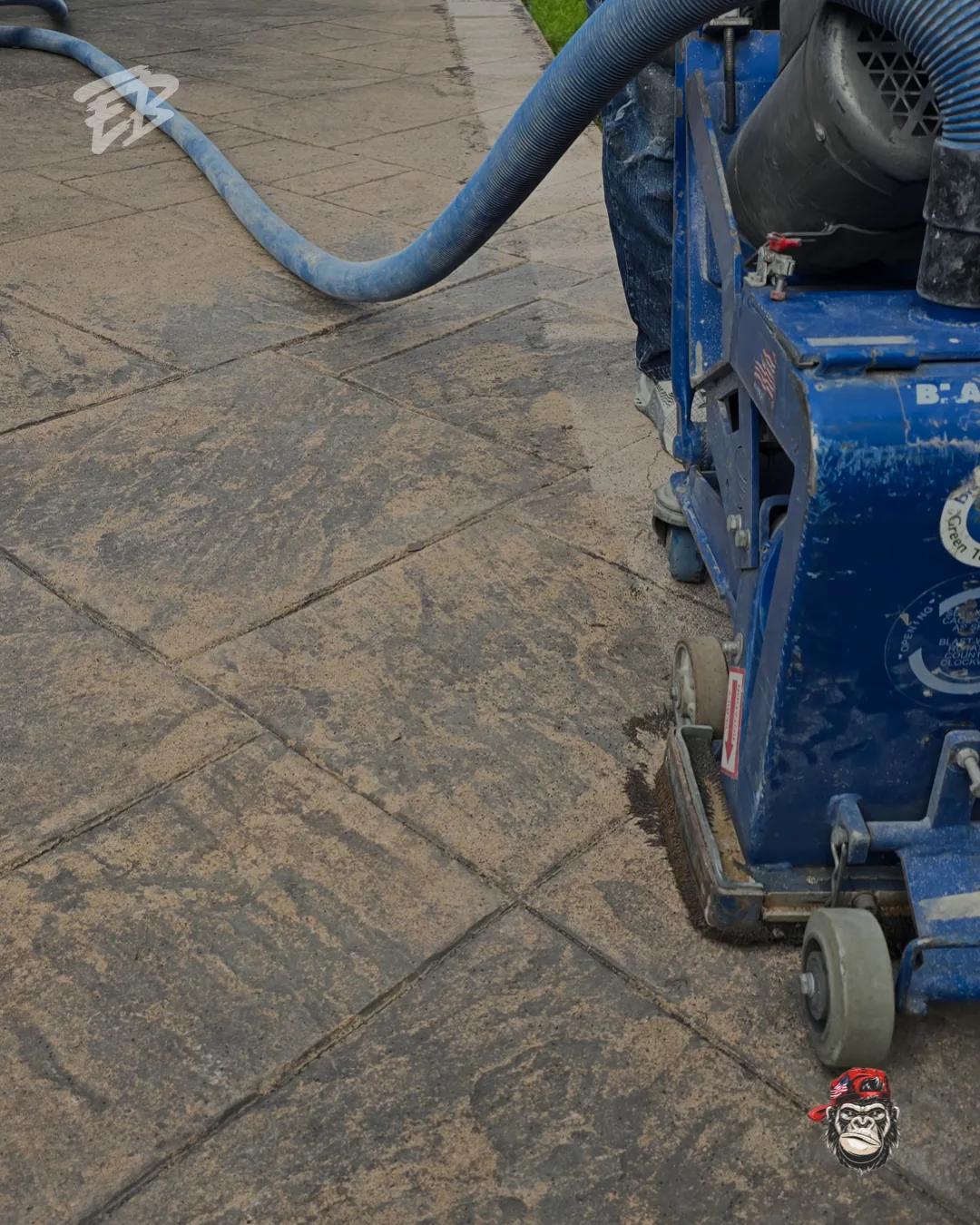
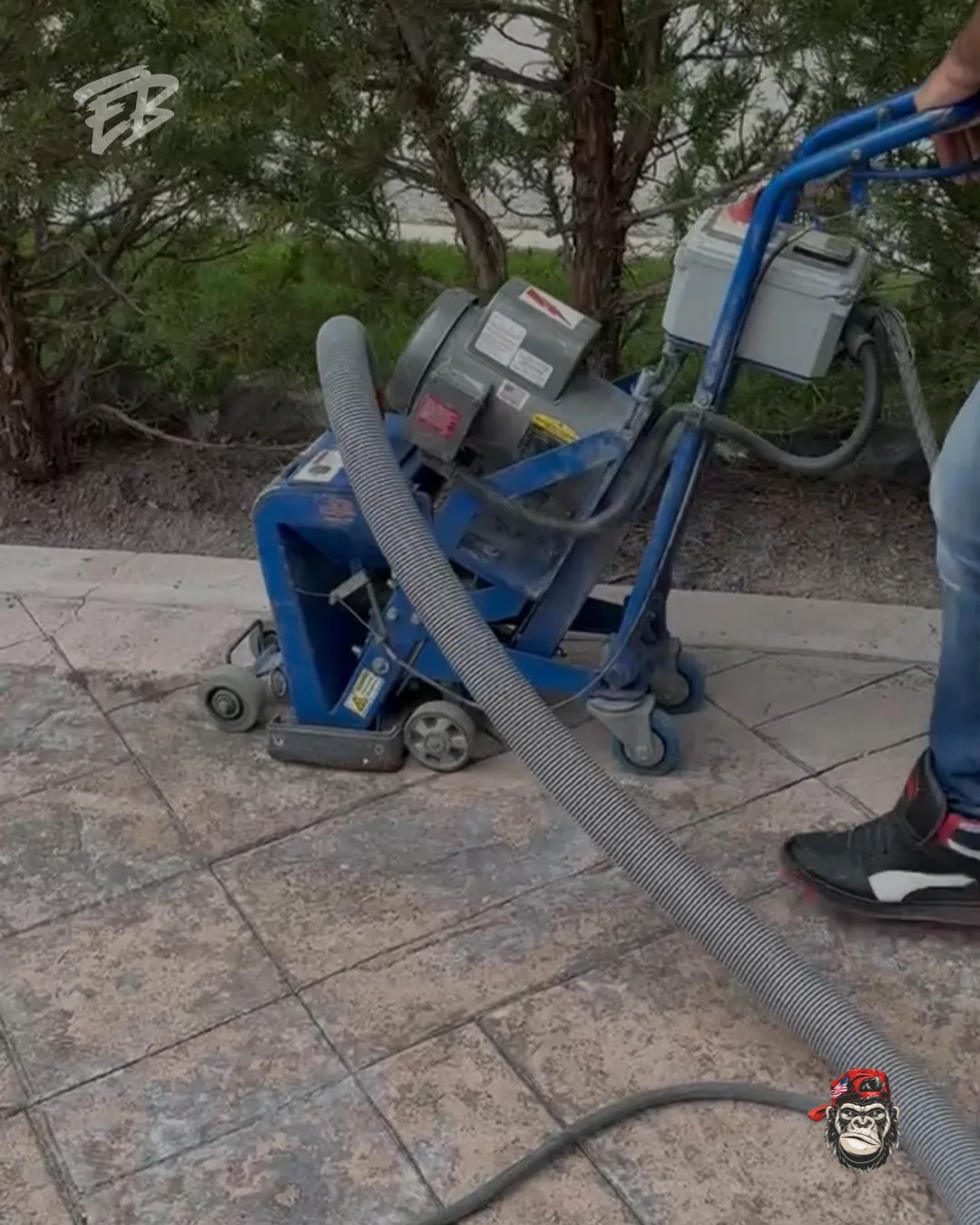
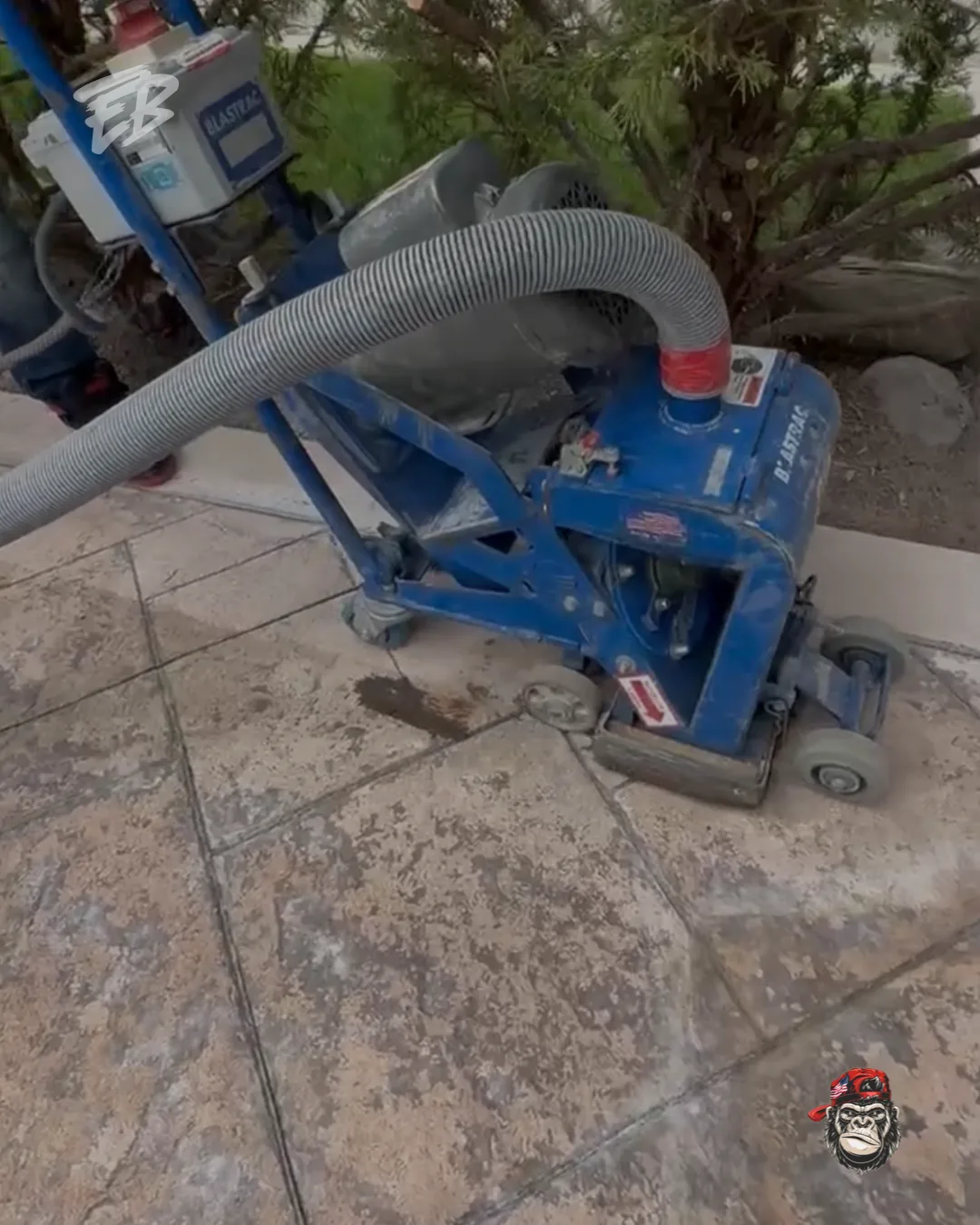
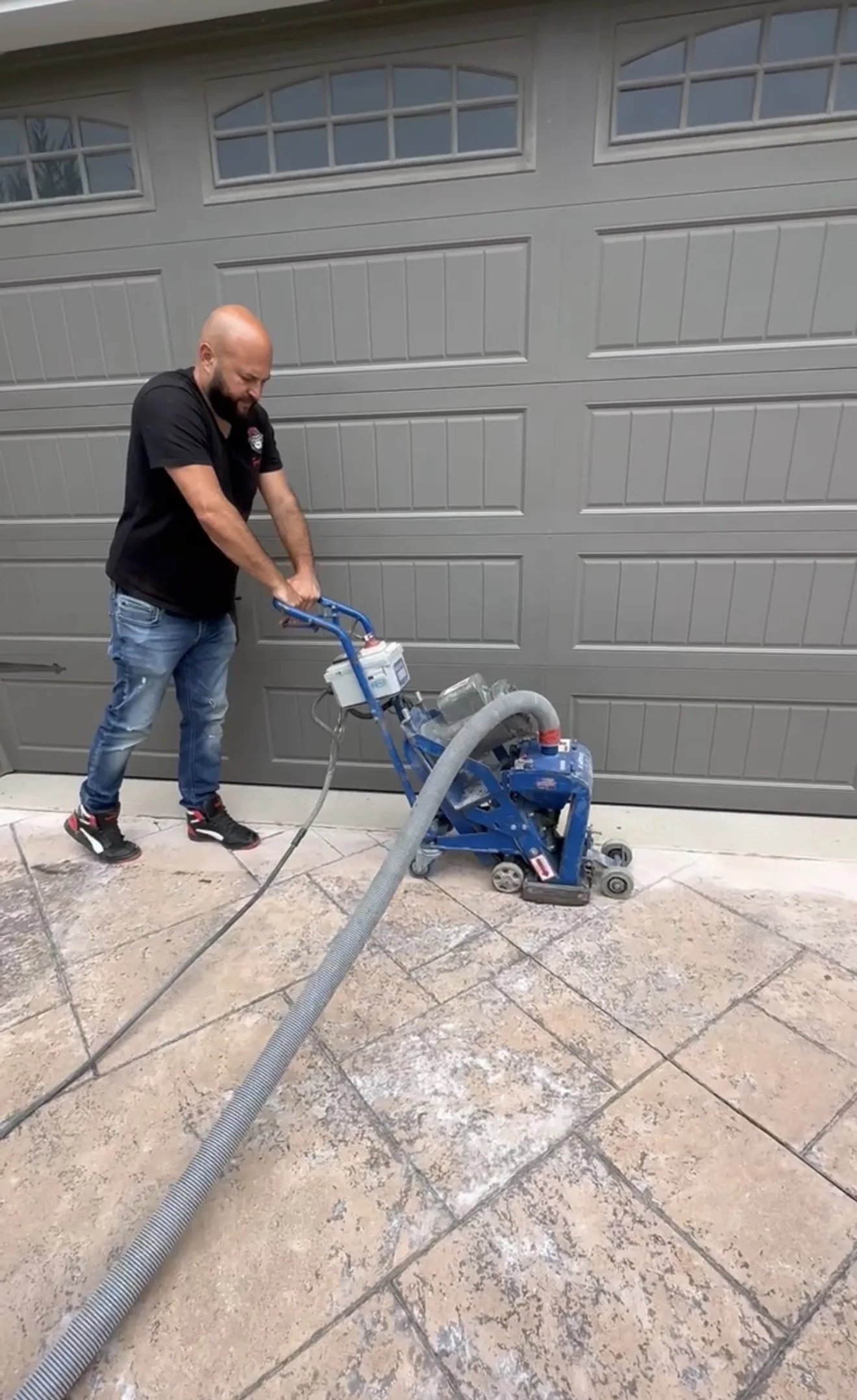
A shot blaster fires steel shot at the slab inside a sealed housing and recovers the shot and debris in the same pass. On a driveway this accomplishes three things at once:
- Removes what's on top — old sealers, curing compounds, tire marks, paint and the weathered surface layer of the concrete itself
- Opens the pore structure so the new system bonds mechanically instead of sitting on a closed, polished surface
- Leaves a uniform profile across a large area faster than any other method, with dust captured at the source rather than blown across the yard
Our unit is a Bartell Morrison Shotblaster Hornet — 2.8 hp on 110V. Running on standard household power matters on residential work: no generator, no cabling, no coordination with an electrician.
Why pressure washing isn't preparation
This is the most common misunderstanding on exterior work. Pressure washing cleans a slab. It does not profile one. A washed driveway looks ready and is still, chemically speaking, a closed surface — which is why so many DIY sealers peel in sheets after the first heavy rain.
Acid etching has the same problem in a different form: it eats the surface unevenly, leaves residue that has to be neutralized, and cannot produce a consistent profile across 700 square feet of slab.
What South Florida does to an exterior slab
UV, all day, all year. A driveway takes more direct sun than any other surface on the property. Non-UV-stable products amber and chalk within a couple of seasons — visibly, because there's nothing shading the result.
Rain sits in the low spots. Wet-season storms leave standing water for hours. Anywhere the slab holds water, an unbonded coating lifts first.
Algae and mildew. Warmth plus constant moisture means biological growth on any porous exterior surface, especially on shaded north-facing sections. A sealed slab with a cleanable finish stops the black streaking that turns a light driveway grey.
Hot tires. Summer pavement temperatures leave tires hot enough to lift a weakly bonded coating when the car cools. On a driveway this is the single most common failure, and it's almost always a preparation problem rather than a product one.
Is it worth doing?
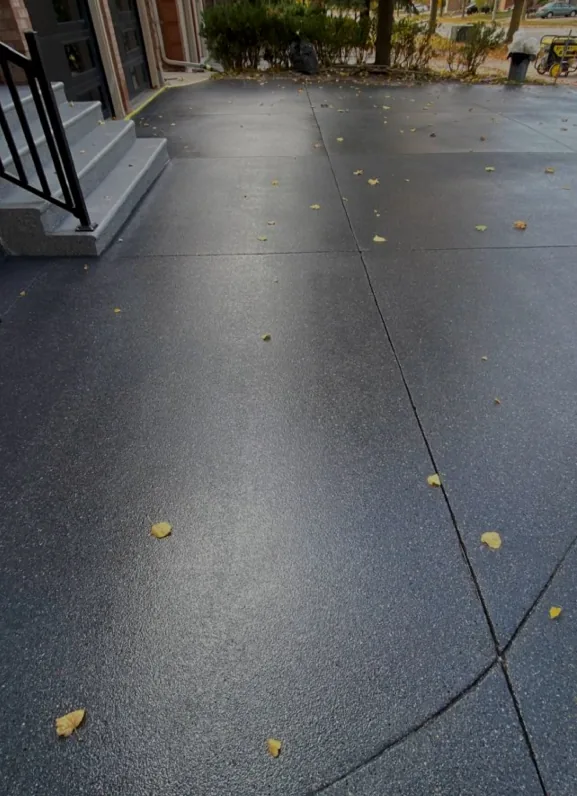
For a slab that's structurally sound but stained, chalky or sealed with something that's failing — yes. Blasting and recoating costs a fraction of replacement and takes days rather than weeks.
For a slab with structural cracking, significant settlement or spalling across large areas, preparation and coating hides the symptom without fixing the cause. We'll tell you when that's the situation rather than quote a system that won't hold.
Send us photos and the approximate square footage and we'll tell you which of the two you're looking at.