Beyond the standard garage floor
Most garage floors get one of two treatments: bare concrete, or a basic grey coating. The premium tier is a different conversation — the floor becomes part of how the space looks rather than something that merely survives it. Four systems occupy that tier, and they solve different problems.
Metallic epoxy
Pigmented resin poured and then moved, so the metallic particles drift as it levels. The result has depth and movement that cannot be reproduced twice — two floors from identical materials will not match.
Best for: showcase garages, collector spaces, anywhere the floor is meant to be looked at.
Trade-off: a mirror finish shows dust and tire marks more than any other system. Stunning in photos, higher maintenance in daily use.
Full broadcast flake
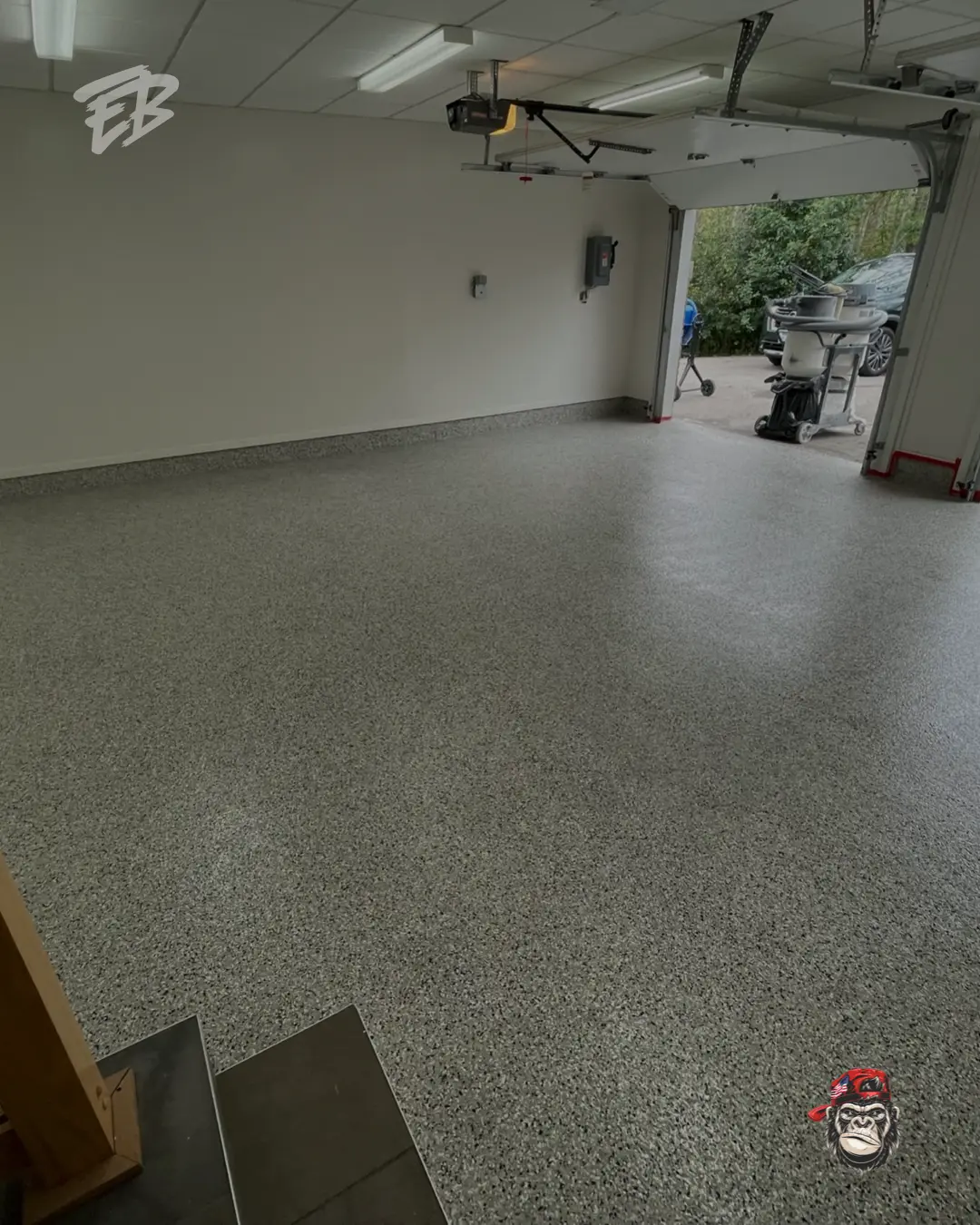
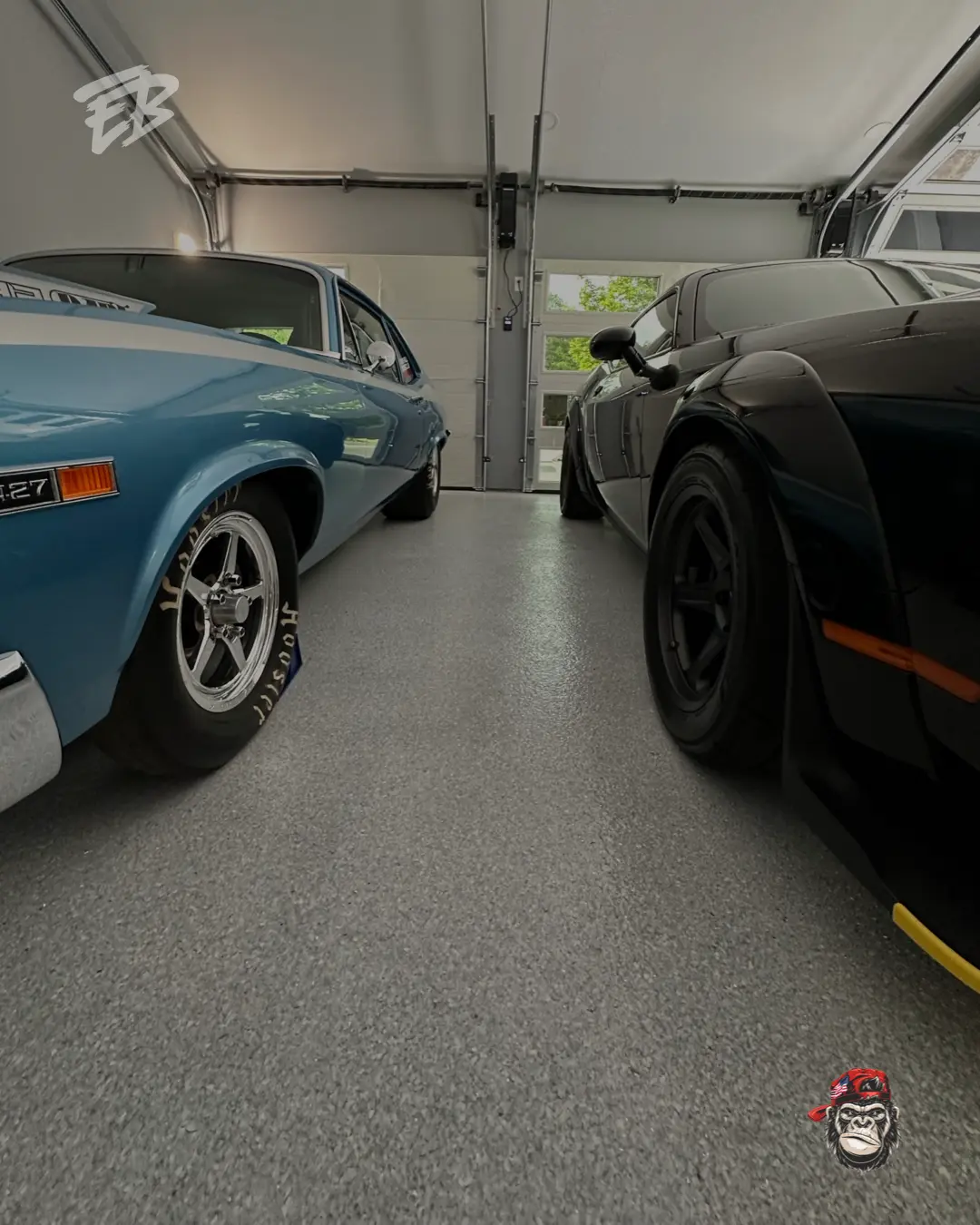
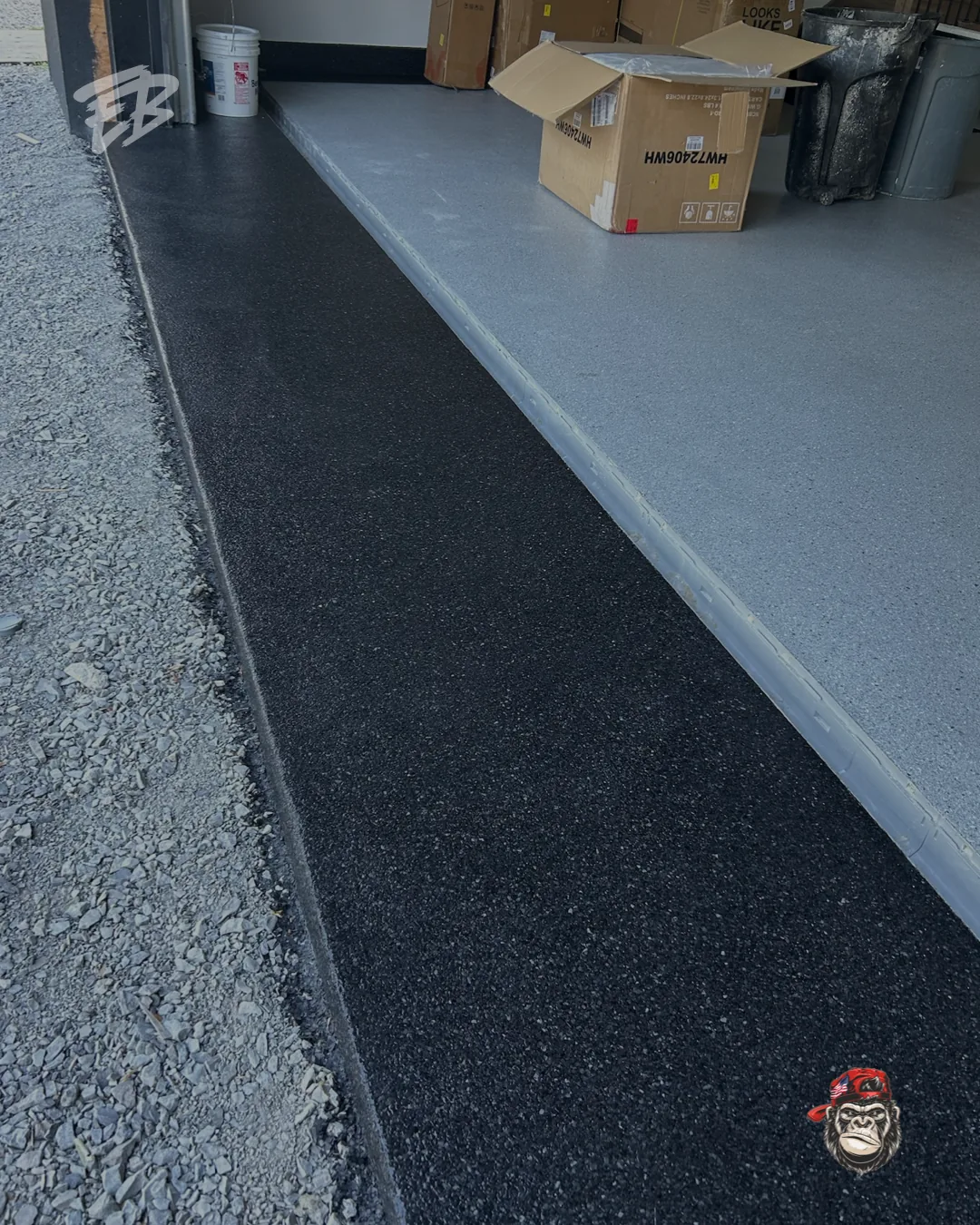
Vinyl flakes broadcast to refusal into an epoxy base, then sealed with a protective topcoat. The most requested premium system, and for practical reasons: the visual texture hides dust, tire marks and everyday traffic almost completely.
Best for: working garages that still need to look deliberate.
Trade-off: the texture is a design choice — it reads as pattern, not as a solid surface.
Quartz broadcast
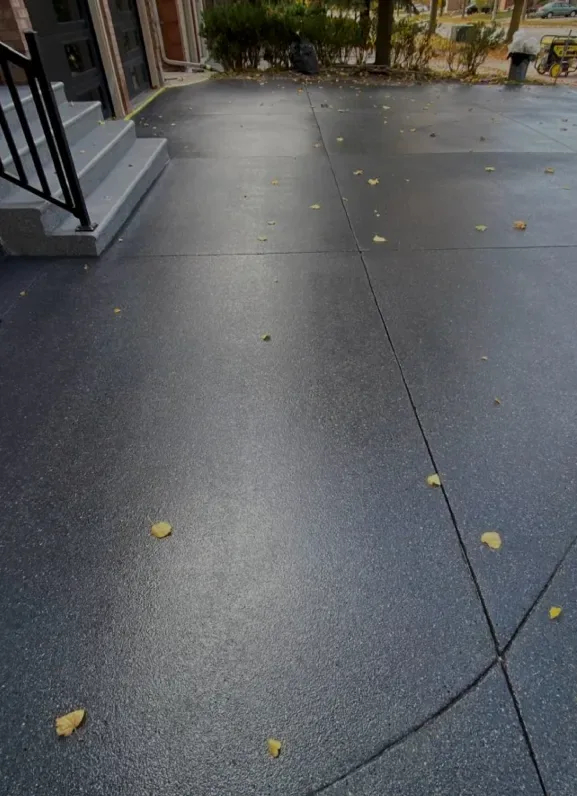
Coloured quartz aggregate instead of vinyl flake. Thicker, harder, and considerably more slip-resistant.
Best for: garages that double as workshops, wash areas, or anywhere with real wet exposure.
Trade-off: the coarser texture takes more effort to clean than flake or metallic.
Polished concrete
Not a coating at all — the slab itself, ground and refined through progressive diamond grits. Nothing on top means nothing to delaminate.
Best for: modern architecture, and slabs that test high for moisture where a coating would need a mitigation membrane first.
Trade-off: only works on a sound, reasonably flat slab. Existing damage shows through rather than being covered.
What matters more than the finish
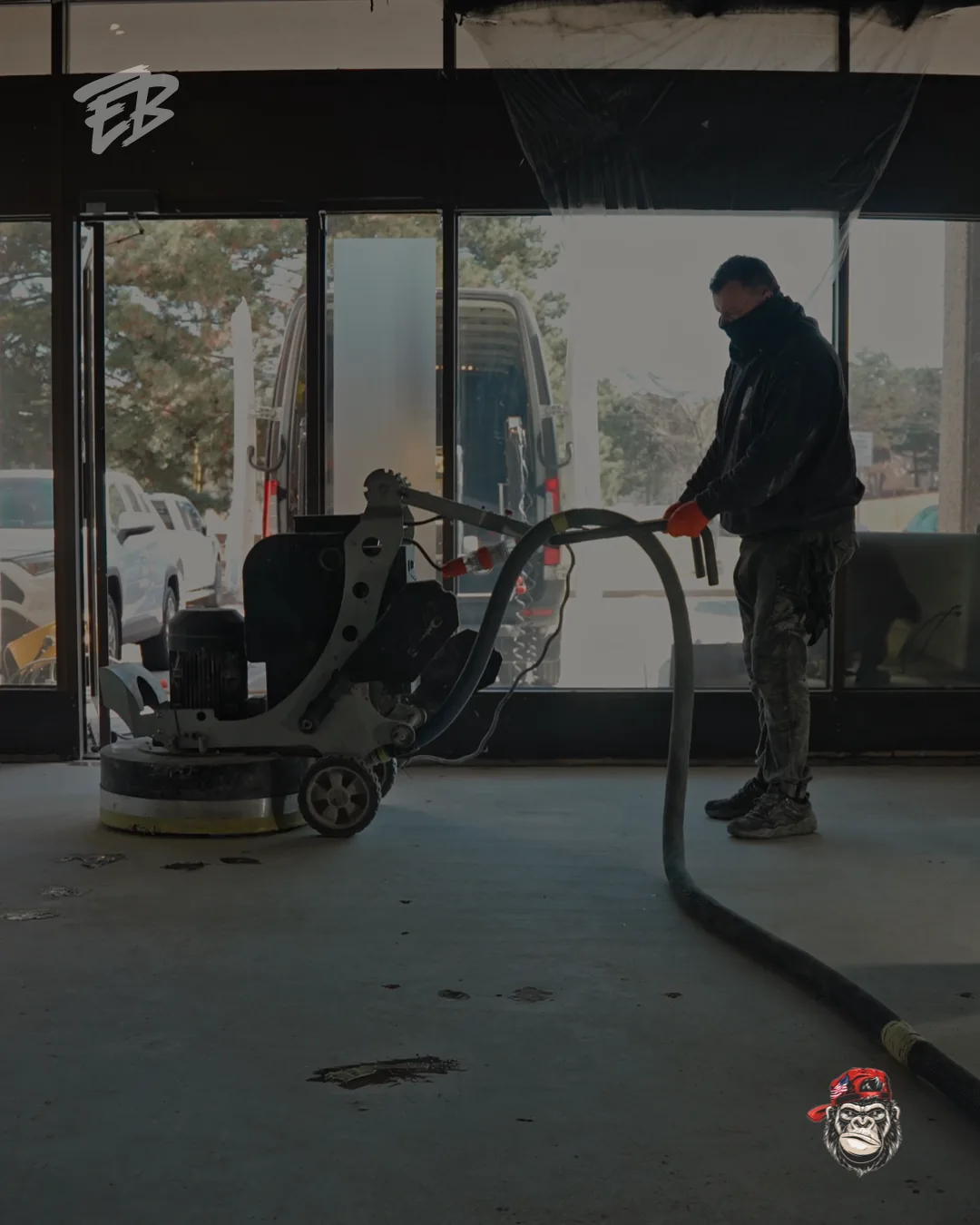
Every one of these systems fails the same way if the preparation is wrong. Planetary diamond grinding to a CSP-3 profile, full crack repair, and moisture testing before specification. On slab-on-grade construction near the water table — which is most of South Florida — that testing decides whether a decorative system can go down at all.
Two further factors here specifically: garages open to the air need a UV-stable topcoat, or a light-coloured floor ambers within a couple of seasons; and summer hot-tire pickup will lift any of these systems if the bond wasn't earned during preparation.
Choosing between them
If the garage is on display, metallic. If cars come and go daily, flake. If there's water and work happening, quartz. If the architecture is minimal and the slab is good, polished.
We bring physical samples on site so you can see each option against your actual lighting and finishes before deciding.