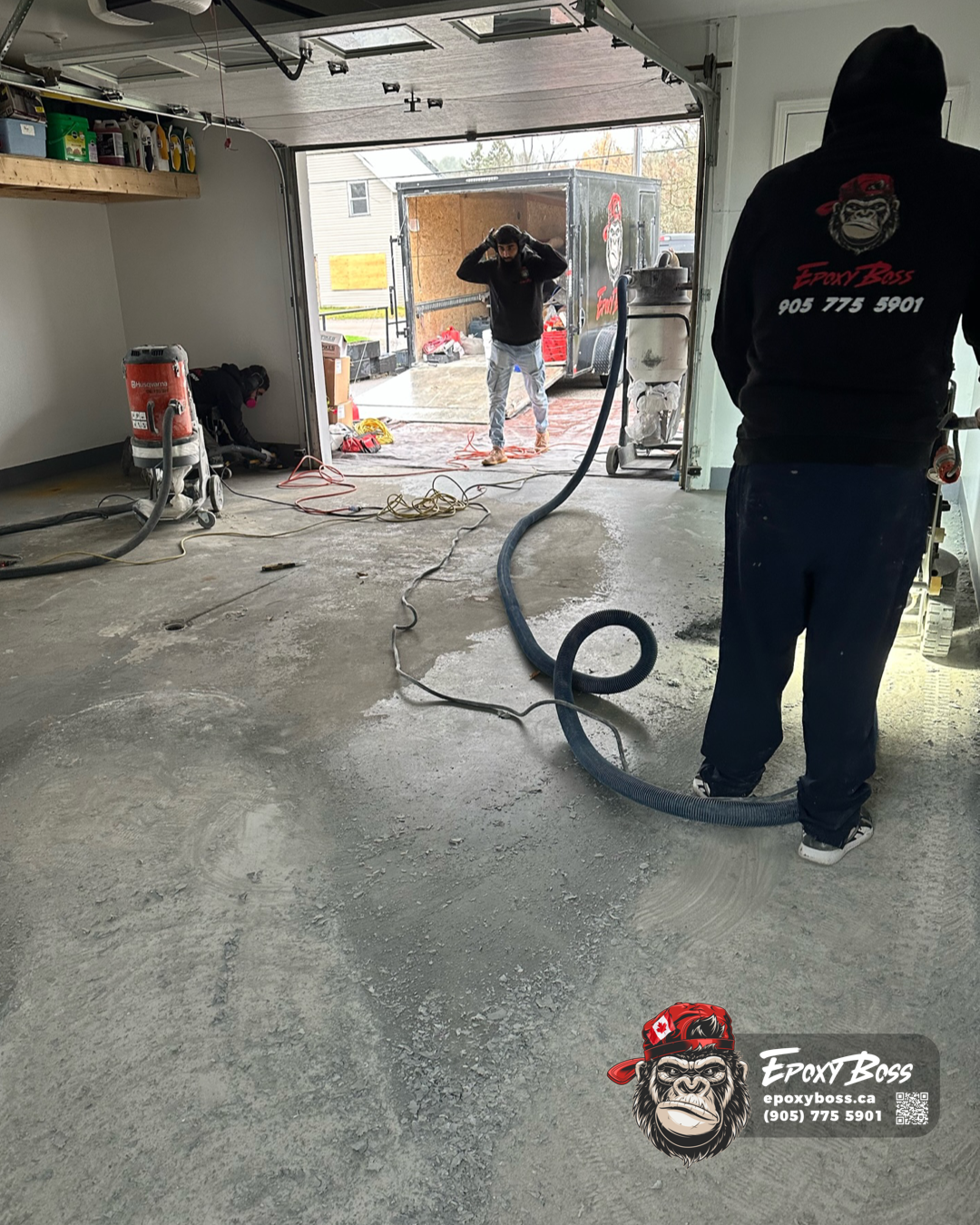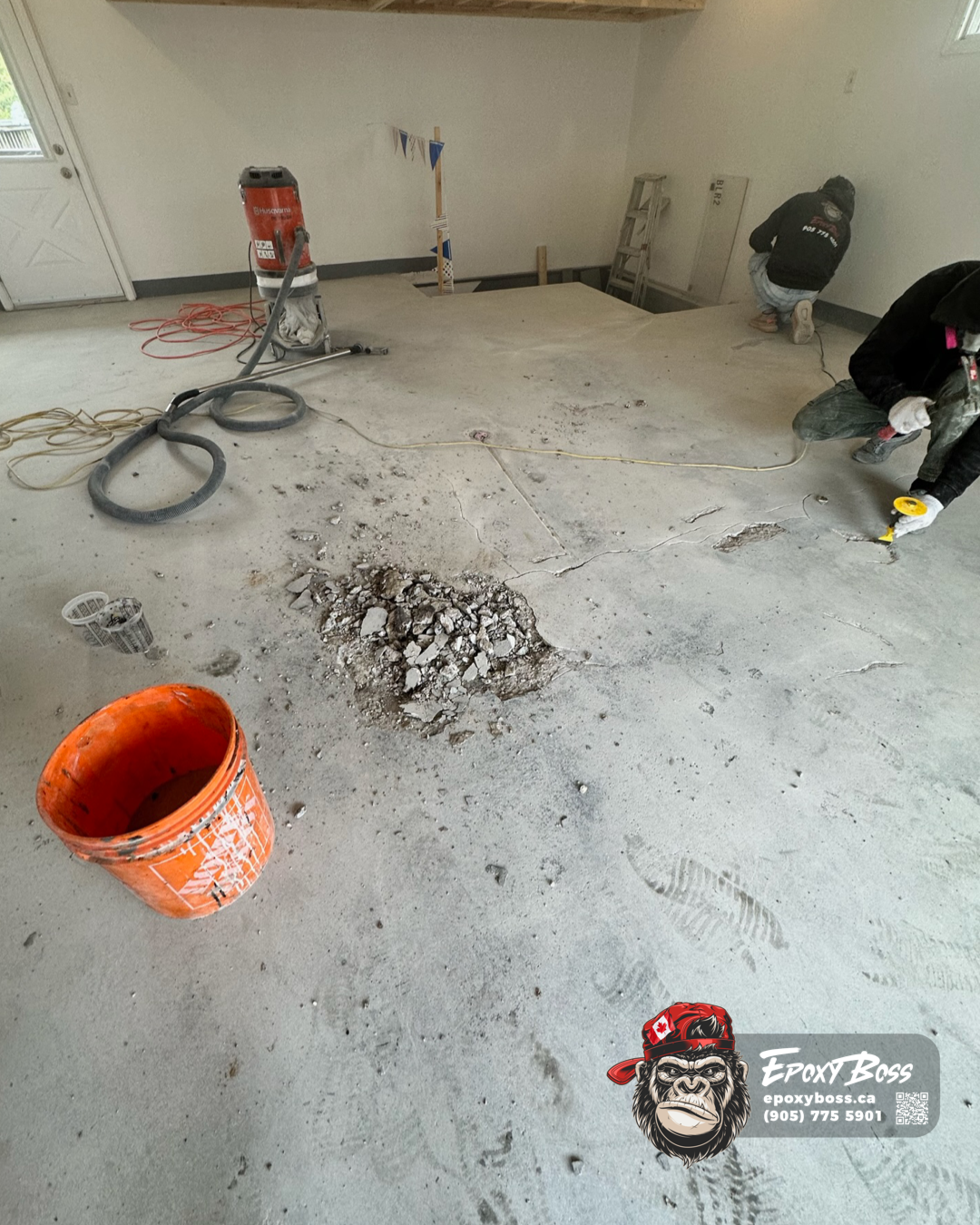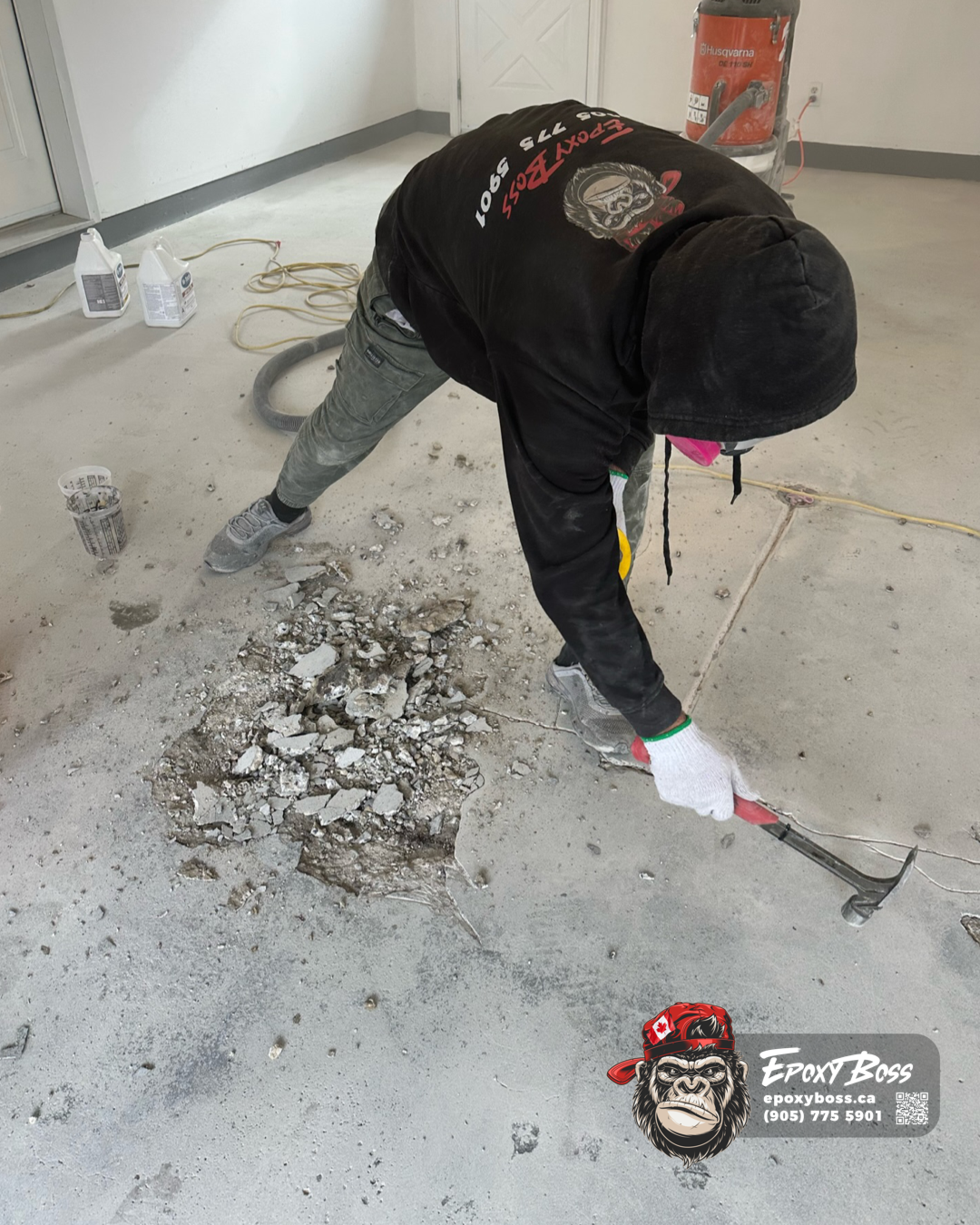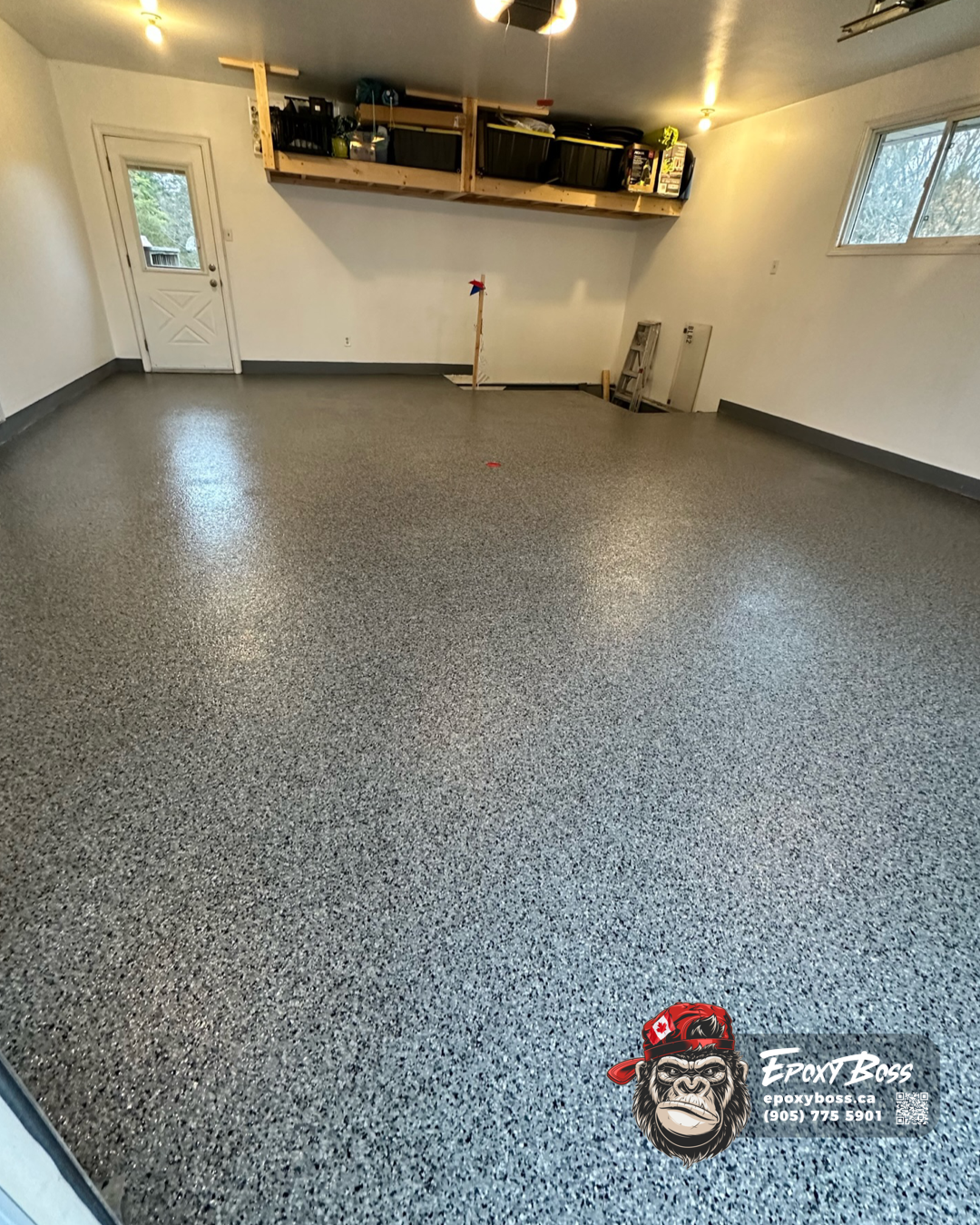
Cure time is not dry time
Ever seen a garage floor that looked perfect on day one and showed bubbles, hazing or peeling a week later? The product usually gets the blame. The cause is almost always conditions.
The most common misconception we run into: “it looks dry, so it's ready.” That isn't how this works. Applying an epoxy coating starts a chemical reaction between Part A (resin) and Part B (hardener). Surface dryness tells you nothing about whether that reaction completed correctly.
What the reaction is actually sensitive to
- Ambient temperature
- Relative humidity
- Moisture content of the concrete itself
- Ventilation and air movement
- Dew point measured against slab surface temperature
Miss the window on any of these and the results show up later as surface bubbling, poor adhesion, premature chipping, yellowing or hazing, and delamination within months — long after the crew has left.
Why dew point is the number that matters here
In much of the country the limiting factor is cold: below roughly 50 °F, standard epoxy slows to a crawl or stalls entirely. South Florida almost never has that problem. What it has instead is moisture in the air.
When the slab surface temperature sits within about 5 °F of the dew point, moisture condenses on the concrete as the coating is applied. You often can't see it. What you get is amine blush — a waxy film on the surface — along with hazing, soft spots and a bond that was compromised from the first minute.
Through the wet season, from May to October, ambient relative humidity across South Florida regularly holds above 80 %. That doesn't make installation impossible. It makes measurement mandatory: slab temperature, ambient RH and dew point checked before every coat, not estimated from the forecast.
The slab has its own moisture, separate from the air
Even in perfect ambient conditions, concrete can carry enough internal moisture to destroy a coating from underneath. Slab-on-grade construction near the water table, frequently without a vapor barrier, drives vapor upward continuously.
This is measured, not guessed — ASTM F1869 calcium chloride testing or ASTM F2170 in-slab relative humidity probes. Every coating system has a stated limit, and above it the manufacturer's warranty does not apply. Slabs over the threshold need a moisture mitigation membrane before anything else goes down.
How the specification changes with conditions
Polyaspartic and polyurea cure across a wider humidity range than standard epoxy and reach return-to-service far faster, which is why they carry most wet-season work here.
Dehumidification and air movement bring an interior space into range when the weather won't cooperate.
Sometimes the answer is to wait. A coat held for four hours costs a few hours. A coat applied over condensation costs the entire floor.
Why this is the part to ask a contractor about
Anyone can quote a system. Ask instead: do you test the slab before specifying, and do you measure dew point before each coat? The answer separates crews that understand the chemistry from crews that mix product and hope for the weather.
At Epoxy Boss Florida we test the concrete before quoting, monitor conditions on site through installation, and provide warranty terms in writing. Licensed and insured across Broward, Miami-Dade and Palm Beach counties.