Before you sign anything for an epoxy floor coating, concrete polishing or industrial flooring project, ask the contractor for three things: a state license, a certificate of insurance and proof of workers' compensation coverage. All three are verifiable in a few minutes, and each one covers a different risk that lands on you if it's missing.
1. State licensing
Florida licenses contractors through the Department of Business and Professional Regulation. Licenses are searchable by company or individual name on the DBPR's public lookup, and local municipalities may require their own registration on top of the state credential.
What it protects: a licensed contractor has met the state's requirements for experience, financial responsibility and examination. If a dispute goes formal, the license is also the mechanism through which the state can act.
How to check: ask for the license number and look it up yourself rather than accepting a photo of a card. Confirm the status reads active and the name matches the company on your quote.
2. General liability insurance
Liability coverage pays for damage the contractor causes to your property — a grinder that goes through a wall, an overspray that ruins a vehicle, a container that stains a driveway.
What it protects: your building, your contents and your project schedule if an incident stops the work.
How to check: request a certificate of insurance issued directly by the contractor's insurance agent, not a scan forwarded by the contractor. Ask to be listed as certificate holder — it's routine, it costs nothing, and it means you're notified if the policy lapses.
3. Workers' compensation
This is the one property owners most often skip, and the one with the largest downside. In Florida, construction employers are required to carry workers' compensation coverage for their employees.
What it protects: if a worker is injured on your property and the contractor carries no coverage, the claim doesn't simply disappear. It looks for the next responsible party, and that can be the property owner or the general contractor who hired them.
How to check: workers' compensation coverage is searchable through the Florida Division of Workers' Compensation's public database. Exemptions exist for certain officers and owners — if a contractor tells you they're exempt, that exemption is also on file and worth confirming.
Why this matters more on flooring work than it looks
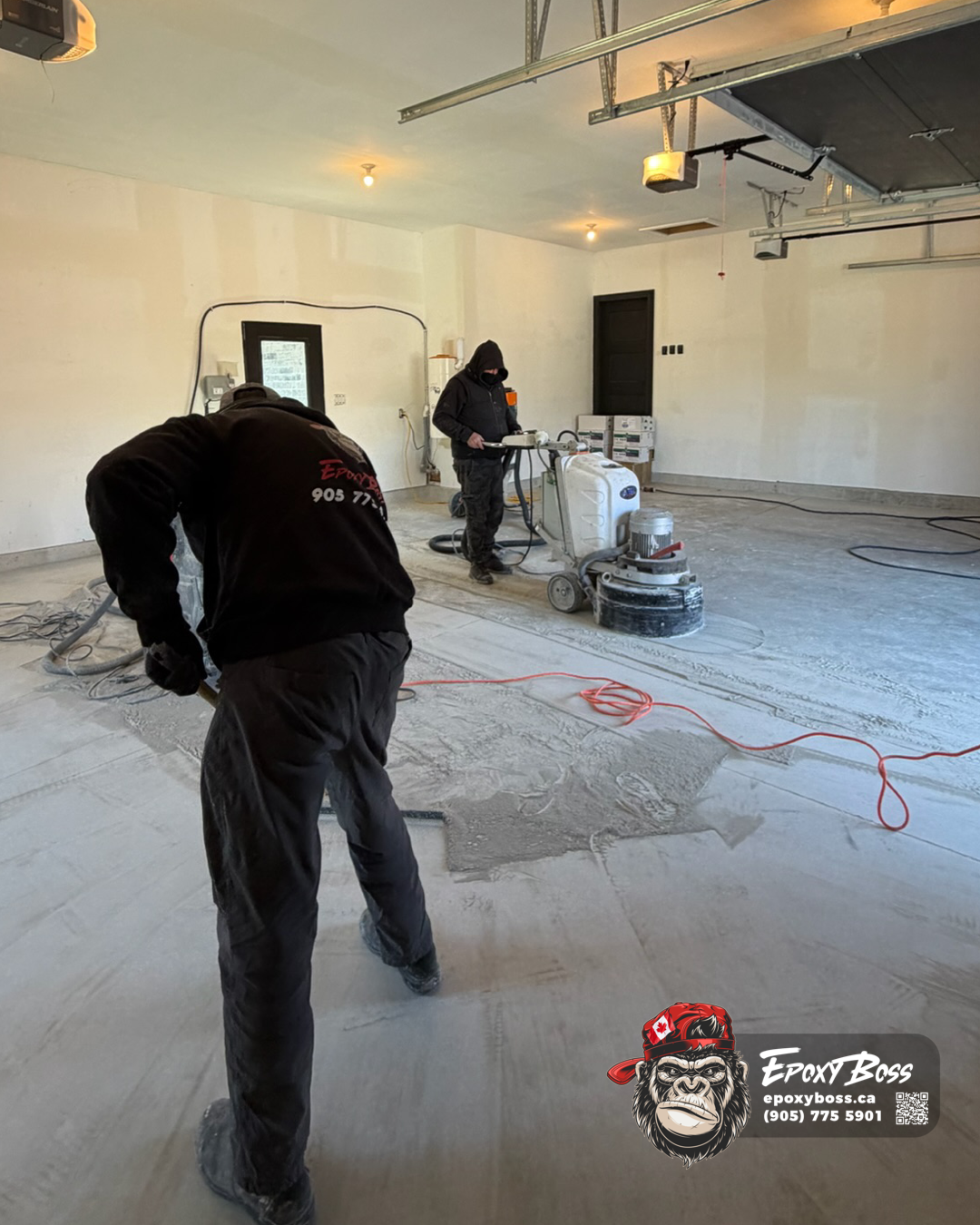
Floor coating work brings heavy grinding equipment, silica dust, solvents and elevated temperatures into an occupied building. Crews work at floor level around your inventory, your vehicles and sometimes your customers. The margin between a routine day and an incident is narrower than the finished floor suggests.
The cost of carrying proper coverage is built into a legitimate contractor's pricing. A bid that comes in well under the others usually reflects something that isn't there — and coverage is one of the easiest things to leave out.
Where Epoxy Boss Florida stands
We are licensed and insured, carry workers' compensation coverage for our crews, and provide our certificate of insurance on request before work begins. Residential installations carry a written warranty, and warranty terms are provided in writing rather than described verbally.
Ask us for the documents. Ask every contractor you're considering for the same three. Any of us who has them will send them without hesitating.